J-pouch surgery recovery unfolds in stages, much like the careful preparation that transforms a house into a home filled with warmth and healing. Expect to spend 4-7 days in the hospital immediately following your procedure, where medical staff will monitor your progress and ensure your newly created internal pouch is functioning properly. During this time, you’ll transition gradually from intravenous nutrition to clear liquids, then soft foods, as your body adapts to its remarkable new configuration.
Plan for 6-8 weeks of initial home recovery before returning to light activities. This crucial period requires patience and gentle self-care as your body heals from the inside out. Most patients experience significant improvement by week 3, though complete adaptation to the j-pouch typically takes 6-12 months as bowel function gradually stabilizes and frequency decreases.
Create a nurturing recovery space at home stocked with essentials: soft toilet paper, barrier creams, comfortable loose clothing, and easy-to-digest foods. Arrange your most-used items within easy reach, transforming your environment into a sanctuary of comfort and healing. Enlist family members to help with meal preparation, household tasks, and emotional support during the challenging early weeks.
Return to work timelines vary from 6-12 weeks depending on your job’s physical demands, while full recovery including return to exercise and normal activities generally occurs within 3-6 months. Each person’s journey differs, so honor your body’s unique healing rhythm while maintaining hope for the vibrant life awaiting you beyond recovery.
The Recovery Timeline: What to Expect in Your Healing Journey
The First Weeks Home: Your Foundation Season
The first tender weeks of your post-surgery recovery journey are like the quiet dawn after a long winter night—a time when your body whispers for gentleness and your spirit craves the warmth of familiar faces. These initial two to three weeks home are your foundation season, a sacred period where rest becomes your most devoted companion.
During these precious days, your world naturally grows smaller and softer. Simple movements that once felt effortless now require thoughtful attention. Walking to the kitchen becomes a small victory worth celebrating, much like a child’s first steps during the holiday season. Your body is learning a new rhythm, adapting to life with your j-pouch, and this adjustment deserves patience wrapped in compassion.
This is when family becomes your brightest constellation of support. Like gathering around a hearth, their presence provides comfort that no medicine can replicate. They’ll help with meals, manage medications, and offer the kind of steady encouragement that lights even the darkest moments. Accept their help with grace—this journey was never meant to be traveled alone.
Expect fatigue to visit often, bringing rest periods every few hours. Your appetite may play hide-and-seek, and that’s perfectly natural. Focus on small, frequent meals and gentle hydration. Remember, healing doesn’t follow a perfect timeline—it unfolds uniquely for each person, creating its own beautiful pattern of progress.
Building Strength: The Middle Months
As winter gradually yields to the promise of spring, so too does your recovery journey enter a season of gentle renewal. These middle months—weeks four through twelve—bring the first whispers of returning vitality, much like the lengthening days that promise brighter times ahead.
During this hopeful phase, you’ll notice energy returning in small, precious increments. Tasks that felt overwhelming just weeks ago begin to feel manageable again. Perhaps you’ll find yourself moving through your home with greater ease, participating in family conversations around the dinner table, or even enjoying a brief stroll in the neighborhood. These small victories deserve celebration, just as we cherish the first robin of spring or the earliest garden blooms.
Your relationship with food continues its transformation during these weeks. Your care team will guide you in gradually expanding your diet, introducing new foods one at a time like opening advent calendar doors—each addition a small gift of normalcy returning. You’ll learn which foods bring comfort and which require more patience. Keep a gentle food diary, noting what nourishes you best.
The pouch itself becomes more predictable, though this adjustment requires grace and understanding from both you and your loved ones. Bathroom visits gradually decrease, and you begin recognizing your body’s new rhythms. This is a time for patience wrapped in hope—knowing that each week brings measurable improvement, each month restores more of the life you remember, and the fullness of recovery awaits like a cherished celebration drawing near.
Creating Your Healing Sanctuary at Home
Essential Comfort Items for Your Recovery Space
Transform your recovery space into a haven of gentle comfort, much like preparing a cozy nest for the precious days ahead. Surround yourself with an abundance of soft, supportive pillows that cradle your healing body like clouds embracing the winter sky. Position a firm pillow near you for bracing during those tender moments when you need to cough or shift position.
Keep your most-needed treasures within arm’s reach on a bedside table: a water pitcher with fresh, cool water, lip balm to soothe dryness, hand sanitizer, and any prescribed medications. Consider adding a small basket of simple comforts like tissues, a phone charger, and perhaps a journal for tracking your recovery journey.
Entertainment becomes your faithful companion during these quiet days. Load up an e-reader with beloved books that transport you elsewhere, create playlists of soothing music that wrap around you like a warm embrace, or queue up lighthearted shows that bring gentle laughter to your days. Creating a restful home after surgery means surrounding yourself with items that spark joy without demanding energy.
Add touches that warm your spirit: a soft throw blanket, a lavender sachet, family photos nearby, or a small plant that reminds you life continues blooming, even during healing seasons.

Making Daily Tasks Easier
Creating an organized, peaceful home environment before surgery is like preparing a cozy nest for a treasured homecoming. Think of your recovery space as your personal sanctuary, where everything you need is within arm’s reach, minimizing unnecessary movement and strain.
Begin by arranging essentials on accessible surfaces. Place water bottles, medications, tissues, and entertainment items on bedside tables or nearby shelves. Consider setting up a comfortable recovery station in a room close to the bathroom, as frequent trips will be part of your healing journey.
Stock your space with soft, loose-fitting clothing and extra supplies within easy grasp. Keep a small basket of toiletries, wipes, and comfort items close by. Prepare simple snacks and meals in advance, storing them at reachable heights in your kitchen.
Remove potential obstacles like area rugs or cluttered pathways that might cause stumbling. Install night lights to guide your way during evening bathroom visits. Consider placing a small chair or stool in the bathroom for additional support during personal care.
Remember, accepting help from loved ones during this time is not only practical but creates opportunities for connection and care that strengthen family bonds through the recovery journey.
Nourishing Your Body Through Recovery
The Early Days: Simple and Gentle
Like those first tender mornings after bringing home a newborn, the initial weeks following j-pouch surgery require gentle care and patient attention. Your body is beginning a remarkable healing journey, and nourishing it properly becomes as essential as wrapping a loved one in a warm, comforting blanket.
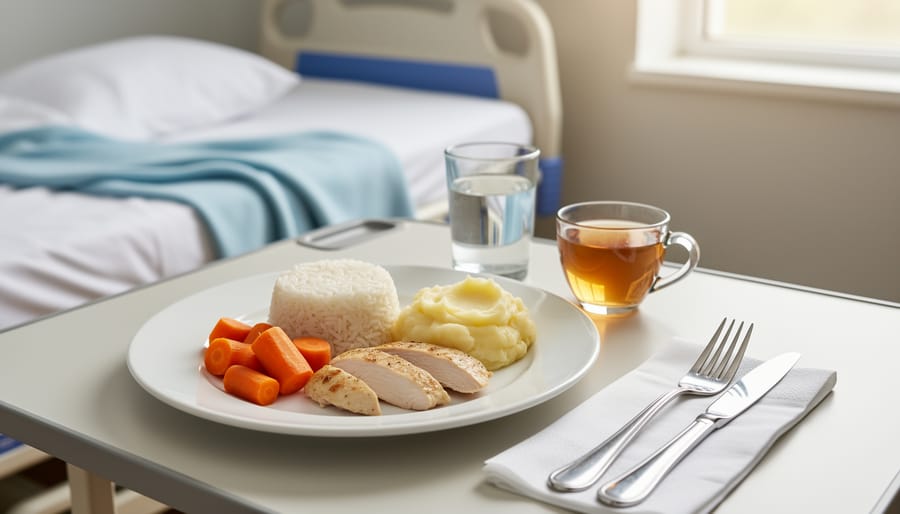
During these precious early days, your kitchen becomes a place of simple comfort. Think of soft, easily digestible foods as little gifts to your recovering body—white rice that melts on the tongue, tender chicken broth that warms from within, smooth mashed potatoes, and delicate scrambled eggs. These humble meals, though plain, carry the profound purpose of supporting your healing.
Bid farewell temporarily to fibrous vegetables, whole grains, and raw fruits—they’ll return to your table in time, like cherished traditions waiting for their season. Instead, embrace cooked carrots softened to tenderness, ripe bananas, refined breads, and gentle pasta. Small, frequent meals throughout the day help your new pouch adjust, creating a rhythm of nourishment that feels natural and sustainable. This thoughtful approach to eating honors your body’s need for time, patience, and the gentle support of family gathered around your recovery.
Expanding Your Menu with Care
Like unwrapping presents on Christmas morning, introducing new foods after j-pouch surgery brings moments of anticipation and discovery. Begin your culinary journey gently, adding one new ingredient every few days—much like testing a single ornament before decorating the entire tree. Your body will whisper its preferences through subtle signals: a comfortable fullness means celebration, while discomfort suggests waiting a bit longer.
Keep a food diary as you would a treasured recipe book, noting which dishes bring joy and which need more time. Celebrate each successful addition—whether it’s your first bite of cooked vegetables or a small portion of lean protein—as victories worth acknowledging with your loved ones. These milestones matter.
Listen closely to your body’s wisdom. Some days will feel like smooth sledding down a snowy hill; others may require patience and rest. Honor both experiences. Your digestive system is learning its new rhythm, adapting like a family adjusting to new holiday traditions. Trust the process, stay hydrated, and remember that gradual progress creates lasting success. Your care team stands ready to guide you, ensuring each step forward feels safe and supported.

The Gift of Support: Embracing Help from Loved Ones
Just as we gather loved ones around the table during the most meaningful celebrations, recovery from j-pouch surgery invites us to embrace the warmth of our community in profound new ways. This is your season to receive, and there’s genuine beauty in allowing others to fill your cup when you cannot pour from your own.
Think of organizing support like planning a cherished holiday gathering, where each person brings their special contribution to the feast. Create a simple meal calendar where friends can sign up to deliver nourishing soups and comforting dishes during those first crucial weeks home. Like the tradition of neighbors sharing cookies during festive seasons, these deliveries become moments of connection that brighten difficult days.
Your circle of care might include the friend who runs errands, the family member who helps with household tasks, or the neighbor who simply sits beside you during afternoon recovery hours. Each act of kindness weaves into a tapestry of support as intricate and beautiful as a handcrafted holiday quilt, where every stitch matters and contributes to the whole.
Consider using digital tools to coordinate help, much like organizing a family reunion. Apps designed for care coordination let you share updates once rather than repeating your story, preserving precious energy for healing. This also prevents that overwhelming feeling when too many people reach out simultaneously with generous but exhausting offers.
Remember, accepting help teaches your loved ones the joy of giving in meaningful ways. They want to be part of your journey toward wellness, to witness your gradual brightening like candles lit one by one until the whole room glows. Let them in, and discover how vulnerability transforms into shared strength, creating memories of compassion that last far beyond recovery.
Recognizing Milestones and Progress
Your recovery journey is filled with precious moments worth treasuring, just like the anticipation of opening a long-awaited gift. Each small victory deserves recognition and celebration, for they mark your path toward renewed health and vitality.
That first walk down the hospital corridor, though perhaps only a few steps, represents a monumental achievement. The gradual return of your appetite brings its own quiet joy, reminiscent of rediscovering favorite flavors after a long absence. When you manage to button your shirt independently or pour your own glass of water, these seemingly simple tasks shine with newfound significance.
Your loved ones will likely notice these milestones before you do, watching with the same tender attention they might give to a child’s first steps. Allow them to share in your triumphs, for these moments create memories that strengthen family bonds. Perhaps you’ll sleep through the night without discomfort, or enjoy a short visit with friends without exhaustion. Each achievement, no matter how modest it appears, marks progress worth acknowledging.
Consider keeping a recovery journal where you document these victories. Recording when you first managed a longer walk, enjoyed a full meal, or returned to a beloved hobby creates a tangible record of your journey. During challenging days, these entries serve as gentle reminders of how far you’ve traveled. Your recovery story, with all its ups and downs, becomes a testament to resilience, hope, and the remarkable capacity of the human spirit to heal and flourish once more.
When to Reach Out to Your Care Team
Just as you wouldn’t ignore a string of broken lights threatening to dim your holiday display, you shouldn’t dismiss warning signs during your recovery journey. Being a thoughtful steward of your healing means knowing when to reach out for help, creating a safety net woven with care and wisdom.
Contact your medical team immediately if you experience a fever above 100.4°F, as this could signal an infection requiring prompt attention. Watch for increasing abdominal pain that doesn’t respond to prescribed medications, or any redness, warmth, or drainage from your incision sites. Think of these signs as gentle bells alerting you that something needs tending.
Unexpected heavy bleeding, whether from your incision or through your pouch, deserves immediate attention. Similarly, if you notice severe dehydration symptoms like dizziness, decreased urination, or extreme thirst despite drinking fluids, don’t hesitate to call. Your care team is there to guide you through these moments, much like trusted family members supporting you through challenging times.
Other concerns warranting a call include persistent nausea preventing you from keeping down fluids, sudden swelling in your legs, or chest pain and breathing difficulties. Remember, there’s no such thing as a silly question when it comes to your wellbeing. Your healthcare providers would much rather hear from you early than see a small concern blossom into something more serious. Trust your instincts, reach out when something feels amiss, and let your care team help illuminate your path to recovery.
Your j-pouch surgery recovery journey, though challenging today, is guiding you toward brighter, healthier tomorrows filled with possibility. Like the patient preparation that transforms a house into a holiday haven, this healing process requires time, gentleness, and the loving support of those gathered around you. Each day of rest brings you closer to renewed strength and vitality. Soon enough, you’ll find yourself back at family tables, savoring cherished meals and creating joyful memories without worry or limitation. The warmth of loved ones surrounding you now serves as the greatest gift during recovery. Trust in your body’s remarkable ability to heal, embrace the comfort of home, and hold onto the beautiful vision of celebrations yet to come—where you’ll laugh freely, embrace fully, and participate wholeheartedly in all of life’s precious moments with those you hold dear.