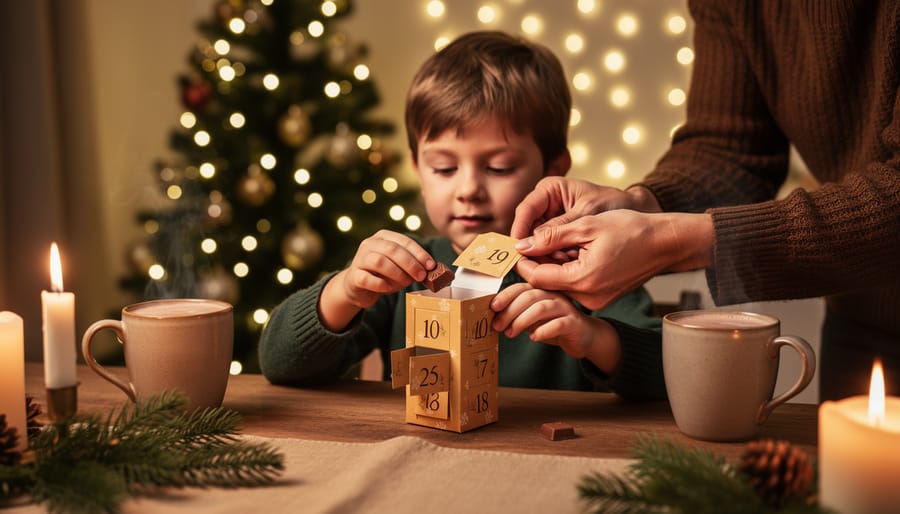
An advent calendar is a special calendar that counts down the days to Christmas, usually starting on December 1, with a small surprise, treat, or moment waiting behind each numbered door, window, or pocket. People use them to turn the long wait for the holiday into a daily ritual, one tiny celebration at a time.
The tradition began with German Lutheran families in the 1800s, who marked December evenings with chalk lines on doors or candles lit one by one. Today the idea has spread across the globe and grown in every direction. Some calendars hold chocolates. Others hide tiny toys, tea bags, kind notes, or small family activities. Many people also use them in faith-filled ways, pairing each day with a Bible verse, a prayer, or a gentle reflection on the season. Others skip the religious side entirely and simply enjoy the sparkle.
Whatever shape yours takes, the purpose is the same: slowing down, building anticipation, and making room for a little daily joy. Here’s what advent calendars are for, how they work, and the many forms they take.
What an Advent Calendar Means: A Countdown Wrapped in Wonder
From Chalk Marks to Paper Doors: Where the Tradition Began
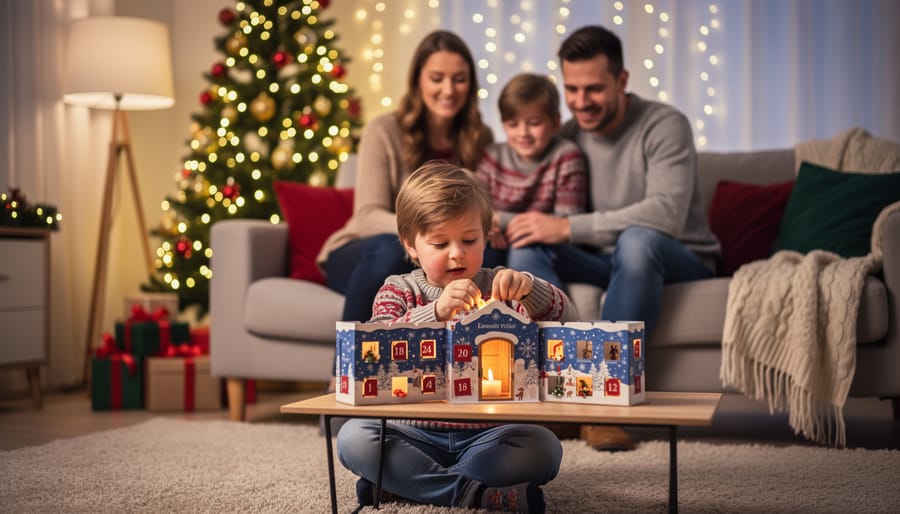
Long before there were paper doors to open, people counted down to Christmas in the simplest ways they could. In some German homes, families marked a chalk line on a door or wall each December day, watching the row grow as the holiday drew near. Others lit a candle each evening, letting the glow stand for another day of waiting. It was the quiet beginning of every Christmas traditions worldwide that count the days down, and you can trace it through the full story of advent calendars.
Printed paper calendars came later, taking shape in Germany in the early 1900s. They made the old chalk-line habit pretty enough to hang on a wall, and the idea quickly spread with travelers and families, reaching homes far from where it started.
Today, Advent is observed in many ways. Some households light a wreath each Sunday, while others follow an Advent candle countdown instead of opening doors. Many Christian communities treat it as a season of waiting and preparation, while others simply enjoy the cheerful ritual of marking each day.
A few simple terms help make sense of it all:
- Advent
- The weeks of waiting and anticipation leading up to Christmas.
- Advent calendar
- A calendar with a small surprise, treat, or message to open each day before Christmas.
- Countdown
- Marking off each day as the big celebration draws closer.
- Door, pocket, or drawer
- The little spot on a calendar that hides each day’s surprise.
- Advent wreath
- A ring of greenery holding candles that are lit one by one on the Sundays of Advent.
However it began in your family, the heart of it stays the same: a little light, a little patience, and something lovely to look forward to.
How an Advent Calendar Works, Day by Day
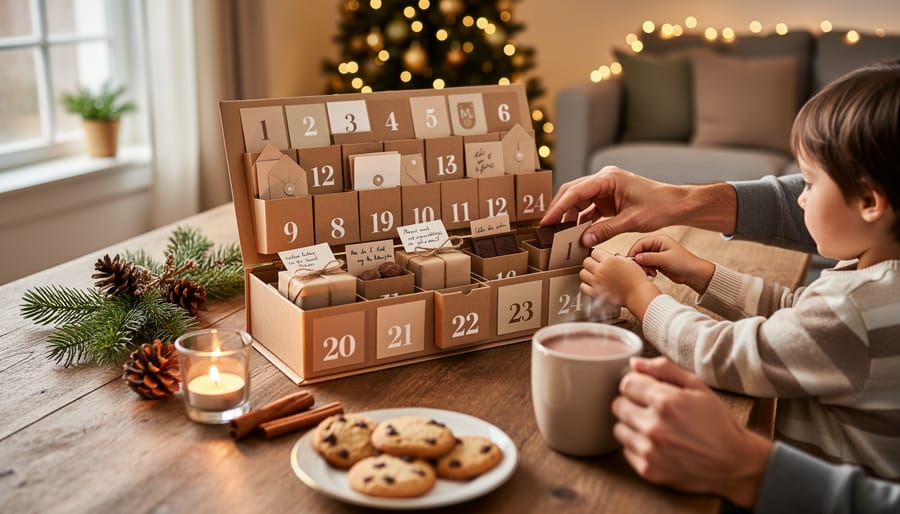
Picture a row of tiny numbered doors, each one sealed tight and waiting for its day. That’s the whole charm of an advent calendar. Most have 24 or 25 doors, windows, pockets, boxes, or drawers, and each holds a little surprise, whether a sweet, a note, a picture, or a small treasure. traditional 24-door calendars count up to Christmas Eve, while others add a 25th door for Christmas Day itself.
The rhythm is simple. Starting on December 1, you open one door each day, and only that day’s door. No peeking ahead, no skipping back. That gentle rule is what turns a pretty decoration into a countdown, because the waiting is part of the magic.
Start dates are flexible, though. Advent is tied to the church calendar, so some begin on First Sunday of Advent instead of December 1, and a few run longer or shorter. Families can choose whatever suits their own celebration.
What makes it stick is the habit. Maybe it’s the sleepy-eyed rush before breakfast, or a quiet moment by the twinkling tree after dinner. Soon that little door becomes a cherished daily pause in a busy season.
What Advent Calendars Are Used For: Joyful Ways to Count Down
Building Anticipation and Daily Family Rituals
Picture a December morning: cocoa steaming on the counter, the tree lights twinkling, and a pair of small hands reaching for tonight’s door. That tiny pause is where an advent calendar does its best work. It turns the long wait for Christmas into a shared moment, whether it happens over breakfast or right before bedtime.
Because the ritual returns every single day, families begin to look forward to it as much as to the surprise itself. Here are the main things people use an advent calendar for:
- Building anticipation for Christmas, one day at a time.
- Creating a daily family ritual everyone can count on.
- Sharing small gifts and treats.
- Encouraging kindness and gratitude.
- Teaching children about the passing of time.
- Bringing friends, couples, and coworkers into the festive spirit.
Often the calendar matters less for what hides behind the door than for the few quiet minutes it gives everyone together.
Sharing Small Surprises, Kindness, and Gratitude
Not every window has to hold a chocolate. Some of the loveliest calendars hide something far simpler: a handwritten note of thanks, a tiny kindness to carry out before bedtime, or a line of Scripture to read by candlelight. Behind one little door, a child might find “Tell someone why you’re grateful for them today.” Behind another, a gentle nudge to shovel a neighbor’s walk, bake cookies for the mail carrier, or tuck a few coins aside for a charity the family has chosen together.
Families who treasure the faith side of Advent often slip in a short Bible verse or a page from the Nativity story, building toward Christmas Eve one day at a time. Others tuck in festive activities: stringing popcorn, singing a carol, or writing a letter to a faraway loved one.
These small moments turn a countdown into a daily practice of warmth, generosity, and noticing the good, which is often what children remember longest.
Celebrations for Everyone
An advent calendar has room for every kind of household. For little ones, it’s pure magic: a tiny door, a bright surprise, a morning worth waking up for. Grown-ups love the ritual too, whether that’s a quiet cup of tea and a small treat before the workday begins, or a daily note tucked inside to brighten a busy December.
Couples can swap turns choosing the surprise, turning the countdown into a sweet little game of secret-keeping. Loved ones far apart can open the same numbered door each day, perhaps over a quick call or a message, so the miles shrink a little. Even four-legged family members get in on the fun, with pet-friendly treats behind each window.
And you don’t need to celebrate Christmas in any traditional way to join in. Many people use a calendar simply to savor the winter season, counting down toward a gathering, a holiday of their own, or the turn of the year.
Types of Advent Calendars and Today’s Countdown Trends
Handmade and Reusable Keepsakes
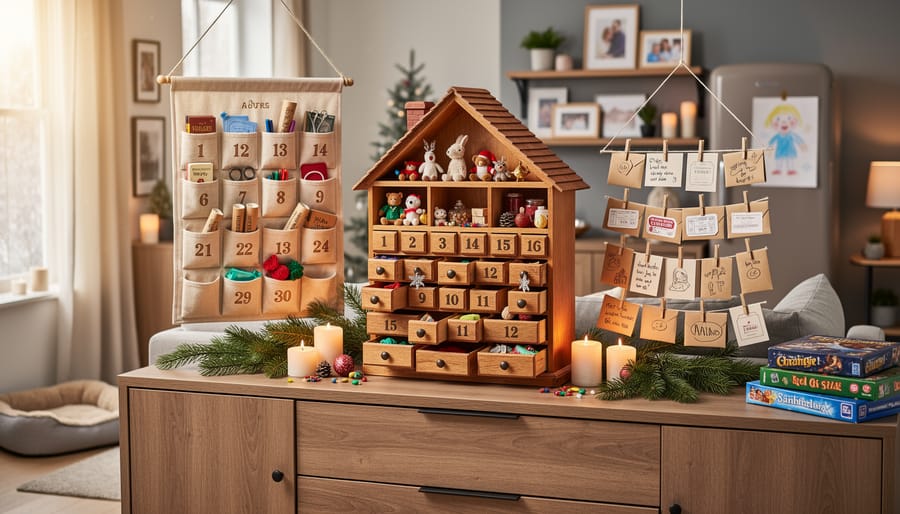
More families are turning to handmade and reusable calendars, and it’s easy to see why. A sewn fabric pocket garland, a wooden chest of tiny drawers, or a row of mismatched tins strung along the mantel can be refilled year after year, collecting memories along the way. The little paper doors of childhood have grown into keepsakes with a story to tell.
Each December, you tuck in a fresh note, a small treat, or a festive activity, and the calendar slowly becomes an heirloom, passed from one generation to the next. If you’d rather start with something ready-made, browse the top advent calendars for ideas, then add your own personal touches.
Experience and Activity Countdowns
Not every countdown needs tiny doors hiding tiny treasures. Some of the most cherished calendars hold no objects at all, only little invitations tucked behind each day: bake gingerbread together, drive around to see the neighborhood lights, watch a favorite holiday film under a blanket, or write a memory of Christmases past.
These activity countdowns turn December into a string of shared moments, which is often what families remember longest. They also stretch easily to fit your life. Plan a cozy evening on busy weeknights and something bigger for the weekend.
You can even match the theme to a personal passion, whether that’s baking, gardening, music, or books. Each day then feels like a small celebration of something you already love.
Common Questions About Advent Calendars
When do you start an advent calendar?
Most families open the first door on December 1 and carry on until Christmas Eve or Christmas Day. Some calendars begin on the first Sunday of Advent instead, so feel free to pick whichever start date suits your own celebration.
Do advent calendars have to be religious?
Not at all. The tradition began as a way to mark the weeks of waiting before Christmas, but today’s calendars welcome every kind of household, from faith-filled to wholly secular, with surprises, activities, or little notes of kindness behind each door.
How many doors does an advent calendar have?
You’ll usually find 24 or 25 doors, one for each day of the countdown. The exact number depends on the calendar’s start date and whether it ends on Christmas Eve or Christmas Day.
Can adults enjoy advent calendars too?
Absolutely! Grown-ups love the daily ritual just as much as children do, whether they’re opening a tiny treat, a favorite hobby surprise, or a gentle reminder to pause and savor the season.
And if you’ve ever wondered whether you can make your own, the answer is a cheerful yes. A handmade calendar can be as simple as numbered envelopes, little boxes, or a string of pockets hung by the window, each tucked with a message, a memory, or a small something to share. It turns the countdown into a keepsake you’ll love pulling out again each December.
There’s a quiet magic in that little paper door. It opens with a soft creak, and for a moment the whole house seems to lean in, waiting to see what’s inside. That’s really what an advent calendar is for: slowing the season down and letting each day arrive on its own.
Some mornings the surprise is a sweet treat. Other days it’s a kind word, a favorite carol, or a small task to share with someone you love. Whatever waits behind the door, the real gift is the pause it creates, a few minutes of togetherness before the rush of the holidays sweeps in.
So choose the countdown that feels like yours. Hang a handmade garland of tiny pockets, fill a box with memories, or tuck notes of gratitude into twenty-four little envelopes. There’s no wrong way to count down to Christmas, only the way that makes your family smile.