
The glow of twinkling lights reflects off mountains of wrapping paper as children tear through gift after gift, their excitement peaking and fading within minutes. Sound familiar? If the mounting toy piles and fleeting joy leave you wondering whether there’s a better way to celebrate, the 8 gift rule offers a refreshing path forward—one that preserves the magic while teaching deeper values.
This intentional gifting framework transforms Christmas morning from a consumer frenzy into a meaningful celebration. Instead of overwhelming children with endless presents they’ll forget by New Year’s, you’ll give eight carefully chosen gifts across specific categories: something they want, something they need, something to wear, something to read, something handmade, something to share, something to do, and something to give. Each category serves a purpose, creating balanced joy that lasts far beyond December 25th.
The beauty of this approach lies in its flexibility. Families can adapt the categories to match their values, budgets, and traditions while significantly reducing holiday stress and overspending. You’ll spend less time shopping and wrapping, yet create more memorable moments. Children learn gratitude, anticipation, and the difference between wanting and needing—lessons that shape their character for life.
Perhaps most powerfully, the 8 gift rule opens space for charitable giving to become a natural family tradition rather than an afterthought. When you’re not drowning in commercial excess, you can model generosity authentically, showing your children that Christmas magic extends beyond your living room to touch lives throughout your community. The memories you’ll create together—choosing charities, wrapping donations, delivering gifts to those in need—become the stories your children will someday share with their own families, keeping the true spirit of the season alive for generations.
What Is the 8 Gift Rule?

The Original Formula That Started It All
Picture Christmas morning: the tree glows softly, stockings bulge with promise, and beneath the boughs lies a thoughtfully curated collection of eight gifts per child. This beloved formula transforms overwhelming excess into meaningful abundance through eight simple categories: something they want, something they need, something to wear, something to read, something they wish for, something to share, something to do, and something to give.
Imagine the delight when they unwrap that coveted toy they’ve been dreaming about since October, followed by the practical warmth of new mittens decorated with snowflakes. A beloved storybook becomes a cherished bedtime tradition, while heartfelt DIY presents in the “something to share” category create family memories. Experience gifts like museum passes or craft kits fill the “something to do” slot, promising adventures long after the wrapping paper settles.
This framework brings intention to your giving, ensuring each present serves a purpose while creating that magical pile under the tree that makes young hearts flutter with anticipation.
Why Less Really Does Mean More
Remember those Christmases where the living room disappeared beneath a mountain of wrapping paper, and by afternoon, the children couldn’t even recall half of what they’d opened? There’s a beautiful paradox at the heart of the 8 gift rule: when we give fewer presents, each one becomes a treasure.
Similar to the 7 gift rule, this approach transforms gift-giving from overwhelming to intentional. Parents find themselves freed from the frantic mall marathons and midnight online shopping sessions, replaced instead with thoughtful consideration of what truly matters. Each gift becomes a story, chosen with care and wrapped with love.
The emotional rewards ripple outward like carolers’ voices on a snowy evening. Children learn to savor rather than accumulate, discovering deeper appreciation for what they receive. Meanwhile, families redirect saved resources toward causes close to their hearts, whether sponsoring holiday meals for neighbors or supporting toy drives. The spirit of the season shifts from getting to giving, from excess to meaning. In this gentle restraint, Christmas morning becomes less about the quantity under the tree and more about the quality of joy shared together.
Weaving Charitable Giving Into Your 8 Gifts
The ‘Gift That Gives Back’ Approach
Imagine the sparkle in your child’s eyes when they unwrap a handcrafted toy from a fair trade artisan cooperative, knowing that their gift helped another family across the ocean celebrate too. This is the magic of gifts that give back, where each present carries a ripple of kindness far beyond your living room.
For the something they want category, consider plush animals from companies that donate to wildlife conservation, transforming a cuddly companion into a guardian of real creatures. That something they need might be a cozy winter coat from brands that provide a coat to a child in need with each purchase, doubling the warmth of your giving.
The something to wear could be beautiful fair trade scarves or mittens, woven by artisan cooperatives that ensure families receive living wages and safe working conditions. These pieces carry stories of hope and dignity in every stitch.
For something to read, choose books from publishers that donate to literacy programs, turning each adventure between the pages into a gift of reading for another child. Even the something they make category shines brighter with craft kits from charitable organizations that fund arts education in underserved communities.
These thoughtful choices weave compassion into every package beneath your tree, teaching little ones that the greatest gifts create joy that echoes.
Adding a Ninth Gift: A Donation in Their Name
There’s something beautifully circular about adding a ninth gift that looks beyond the Christmas tree—a donation made in your child’s name to a cause that touches their heart. This tradition transforms the eight-gift framework into something even more meaningful, teaching little ones that the greatest magic of Christmas lives in giving to others.
For younger children, bring the donation to life with tangible connections. If you’re supporting an animal shelter, show them pictures of the puppies and kittens they’re helping. Many organizations offer beautiful certificates or small tokens that make charitable donations as gifts feel special and real. Wrap the certificate alongside a children’s book about kindness or community helpers, creating a present they can hold while understanding its deeper purpose.
Older children can help choose the charity themselves, perhaps one connected to a cause they care about—ocean conservation, literacy programs, or helping families in need. Present it in a special envelope addressed to them, perhaps tucked into their stocking on Christmas morning. Some families create a tradition of researching charities together during Advent, making the selection process part of the season’s anticipation. This ninth gift whispers a timeless truth: the warmth we create for others returns to fill our own hearts.
The ‘One for Them, One for Others’ Tradition
Imagine the sparkle in your children’s eyes when they learn that each gift under the tree carries a companion gift for someone in need. This heartwarming tradition weaves generosity into the very fabric of Christmas morning, transforming gift-giving from a one-way street into a beautiful circle of kindness.
The rhythm is simple yet profound: for every wrapped present opened, your family commits to one act of giving. Before the holiday arrives, gather around the kitchen table with hot cocoa and create donation tokens—perhaps snowflakes cut from cardstock or small ornaments—each representing a future charitable act. Tuck these tokens between gifts, and when one appears, pause together to choose its purpose. Will it become a toy for the local shelter, canned goods for the food bank, or a contribution to an animal rescue?
Some families make it wonderfully tangible by shopping together for donation items, letting children select toys they’d love to give. Others create a giving jar where coins accumulate throughout December, then decide together where the treasure will bring the most joy.
Teaching Children the Joy of Giving Through the 8 Gift Rule
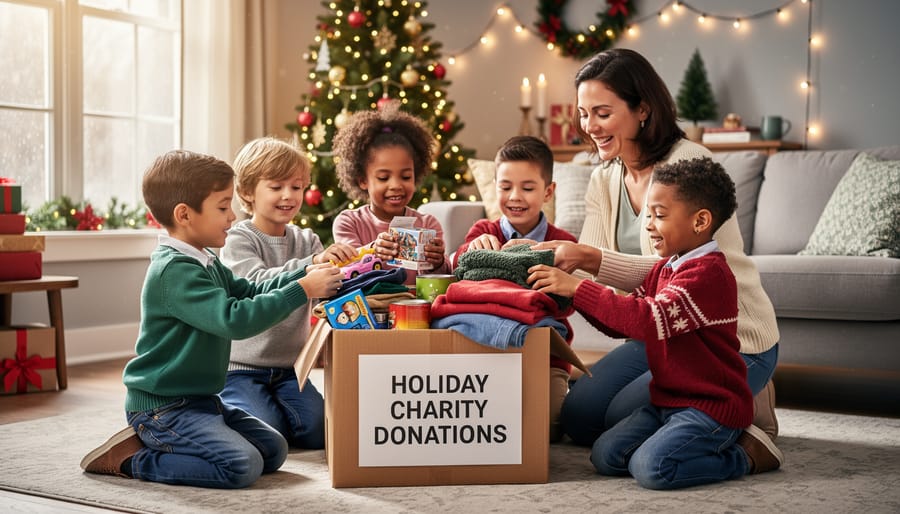
Making Charity Feel Magical, Not Like Missing Out
The secret to raising generous hearts isn’t found in lectures about gratitude—it lives in the moments when children witness the joy their giving creates. Transform charitable giving from an obligation into an adventure by letting your little ones experience the magic firsthand.
Consider making a family expedition to your local donation center before Christmas arrives. Watch your children’s eyes light up as they carefully select toys from their own collection to share with others. The act becomes real, tangible, and filled with purpose when they personally place those treasures into donation bins, imagining another child’s smile on Christmas morning.
Adopting a family together weaves even deeper connections. Many community organizations offer programs where you can fulfill wish lists for children who might otherwise wake to empty stockings. Gather around the kitchen table with hot cocoa and those wish lists spread before you. Let your children help choose gifts within your budget, wrapping each present with extra ribbons and candy canes. Some families tuck handmade cards inside, tiny messengers of hope traveling from one home to another.
Create traditions that sparkle with meaning: volunteer together at a soup kitchen on Christmas Eve morning, or spend an afternoon baking cookies to deliver to a nursing home. These moments plant seeds of compassion that bloom for lifetimes.
When giving becomes part of your family’s Christmas story—not something separate from it—children discover that opening your heart brings a different kind of magic than opening presents ever could. The glow they feel from helping others becomes its own gift, one that never needs batteries or assembly instructions.
The Gratitude Jar and Other Pre-Christmas Rituals
Long before the first present appears beneath the twinkling tree, you can weave magic into December through simple rituals that transform waiting into wonder. The gratitude jar sits at the heart of these traditions—a clear vessel stationed on the kitchen counter where family members drop folded notes throughout the season. Each slip of paper captures a moment of thankfulness, a kindness witnessed, or a blessing counted. On Christmas morning, before gifts are opened, gather together and read these treasures aloud, creating a tapestry of appreciation that reminds everyone what truly fills the heart.
Pair this practice with an advent calendar of giving, where each day reveals a small act of generosity rather than a chocolate treat. Perhaps Monday means baking cookies for a neighbor, while Thursday invites everyone to sort through toys for donation. These daily gestures cultivate awareness of others’ needs, naturally preparing hearts for the charitable component of your eight-gift tradition.
Consider also the angel tree ritual, where children help select tags representing wishes from local families in need. Let them use their own savings to purchase these gifts, experiencing firsthand the joy of being someone’s Christmas miracle. As they wrap presents for strangers, conversations naturally arise about abundance, sharing, and the privilege of having enough to give away.
These pre-Christmas practices don’t compete with gift-giving excitement—they deepen it, creating a season rich with meaning that lingers long after wrapping paper is recycled and cookies are consumed.
Donation Etiquette: Giving Graciously This Christmas
What Charities Actually Need (And What They Don’t)
Before you box up those gently-used toys or gather outgrown winter coats to donate, take a moment to reach out to the organizations you hope to help. Here’s a heartwarming secret that transforms good intentions into meaningful charitable giving: charities know exactly what they need, and often, what arrives on their doorstep isn’t it.
Many organizations maintain wish lists on their websites, filled with specific items that truly serve their communities. A food pantry might desperately need canned proteins and cooking oil, while toy donations overflow. A shelter may welcome new socks and underwear far more than another batch of stuffed animals. The key is asking first, not assuming.
Contact your chosen charity by phone or email before gathering donations. Inquire about their current needs, size preferences, and any items they cannot accept due to safety regulations or storage limitations. Some organizations prefer monetary donations, which allow them to purchase exactly what fills their gaps and often stretch further thanks to wholesale pricing and tax benefits.
Remember, donations requiring extensive sorting, cleaning, or disposal actually create additional work for already stretched volunteer teams. That broken toy you hoped someone might repair or those stained linens you thought could find use somewhere ultimately burden the very people you wish to help. When we listen to what charities actually need, our generosity becomes a true gift rather than an obligation wrapped in good intentions.
The Warmth of Anonymous Giving Versus Recognition
There’s something beautifully paradoxical about the spirit of giving: sometimes the gifts that touch hearts most deeply are the ones given without fanfare or expectation of recognition. Like the mysterious neighbor who once left a basket of homemade cookies on your doorstep during a difficult December, or the anonymous donation that lit up a community Christmas tree, quiet generosity carries its own special magic.
Yet giving isn’t always meant to be invisible. When your workplace runs a matching program that doubles charitable contributions, speaking up about your donation can inspire others while multiplying the impact. When you teach children about generosity by involving them in selecting toys for a giving tree, the act becomes a shared moment of growth and connection. The key lies in examining your heart’s true compass.
Anonymous giving shines when recognition might diminish the purity of the gesture or when drawing attention feels uncomfortable for either giver or receiver. It’s the spirit behind Secret Santa traditions and those mysterious envelopes that appear just when families need them most. These quiet acts echo the original Christmas story itself, wrapped in humble mystery and wonder.
Meanwhile, acknowledged giving works beautifully when it creates ripples of inspiration, encourages community participation, or honors matching opportunities that stretch your generosity further. The warmth comes from checking your motivations regularly, asking yourself whether you’re giving from genuine love or seeking applause. When the eight gift rule helps your family redirect resources toward others, let your heart guide whether that generosity blooms in silence or becomes a story that encourages kindness to multiply like snowflakes in a winter storm.
Cultural Traditions of Simplified and Charitable Christmas Giving
Around the world, families have long understood that the truest magic of the season isn’t found beneath wrapping paper, but in the warmth of giving from the heart. In Sweden, the tradition of Julklapp brings laughter and mystery as gifts are tossed through doorways with playful anonymity, reminding us that the joy lies in the surprise itself rather than extravagant displays. Meanwhile, German families honor St. Nicholas Day on December 6th with simple treats tucked into shoes, teaching children that small gestures carry enormous meaning.
The Icelandic tradition of Jólabókaflóð, or the Christmas Book Flood, celebrates the gift of a single book paired with hot chocolate and cozy evenings together. This beautiful custom shows how one thoughtful present can create lasting memories far beyond Christmas morning. In many Latin American communities, the Three Kings tradition on January 6th shifts focus toward charitable acts, with families preparing gift bags for children in need alongside their own celebrations.
These cultural gift-giving traditions beautifully align with the spirit of simplified giving. They remind us that generations before us celebrated with intention and heart rather than abundance. Many cultures incorporate charitable acts directly into their holiday rituals, whether it’s the British Boxing Day tradition of giving to service workers or the Filipino practice of sharing Noche Buena feasts with neighbors.
These global perspectives offer gentle inspiration for modern families seeking balance. When we embrace mindful gift-giving and weave charitable acts into our celebrations, we’re not restricting joy but rather rediscovering an ancient wisdom: that the season’s true enchantment blooms when we give thoughtfully, share generously, and remember those beyond our immediate circle.
When Family Members Don’t Follow the 8 Gift Rule

The Conversation That Preserves Relationships
The warmth of family traditions need never be dimmed by honest conversations about simplifying the holidays. When Grandma raises her eyebrows at your newfound gift philosophy, remember that you’re not rejecting her love—you’re reshaping how it’s expressed.
Begin with gratitude and warmth: “We treasure how you’ve always made Christmas so special for the children. This year, we’re trying something that helps us focus on what matters most—time together and teaching the kids about gratitude.” Share your family’s why: perhaps it’s reducing clutter, easing financial pressure, or teaching mindful consumption.
Offer beautiful alternatives that preserve connection. Suggest grandparents give the “experience” gift—tickets to the zoo become magical memories they’ll create together. Encourage contributions to a college fund or special interest account. Some families welcome books that grandparents inscribe with personal messages, creating treasured keepsakes that transcend the moment of unwrapping.
Frame it positively: “The children light up when they really understand and appreciate each gift” rather than “They have too much stuff.” Most relatives simply want to express their love—they’re usually grateful for guidance on how to do so meaningfully.
Remember, these conversations plant seeds for new traditions. The magic isn’t in the abundance; it’s in the intention behind each carefully chosen treasure.
The Gift Rotation and ‘Experience’ Compromise
Sometimes the magic lies not in unwrapping eight presents on Christmas morning, but in spreading the joy throughout the year. Consider the gift rotation approach, where grandparents or extended family members present one special gift at Christmas, then surprise little ones with others during birthday months or summer adventures. This transforms the eight-gift framework into year-round anticipation rather than a single-day extravaganza.
Experience-based compromises work beautifully too. That coveted “something you want” might become a museum membership that unfolds throughout the seasons, or a cooking class where memories simmer alongside recipes passed down through generations. For older children, contributions to college savings or special trip funds honor both practical wisdom and dreams of future adventures.
These creative solutions respect everyone’s gifting heart while maintaining boundaries. Aunts and uncles can pool resources for meaningful experiences. Friends can exchange ornament-making afternoons instead of store-bought trinkets. The spirit of giving remains intact, simply reimagined through thoughtful compromise that celebrates connection over consumption.
Picture this: Christmas morning dawns soft and golden, and instead of diving into a mountain of torn wrapping paper and forgotten boxes, your children linger over each carefully chosen treasure. There’s the something they want, held close with genuine delight. The something they need, practical yet thoughtful. The something to wear, already being tried on with excited twirls. And the something to read, pages already turning as curiosity takes hold. The handmade gift carries whispers of love in every stitch or brushstroke, while the experience gift sparkles with anticipation of adventures yet to come. The educational gift promises discovery, and that eighth gift—the one given in their name to help others—plants seeds of compassion that will bloom for years.
The morning moves slower, sweeter. There’s time for hot cocoa that doesn’t grow cold, for thank-you hugs that linger, for actually playing with new toys instead of rushing to unwrap the next thing. The room feels calmer, your heart fuller. And somewhere across town or across the world, another family’s morning is brighter because of that eighth gift, creating invisible threads of kindness woven into your holiday tapestry.
Starting the 8 gift rule doesn’t require perfection. Perhaps this year you simply reduce the excess, or add just one charitable gift to your tradition. Let the rhythm find you naturally, adapting to your family’s unique melody. The magic of Christmas was never really about abundance—it was always about presence, gratitude, and the warm glow of love shared generously. This simpler approach doesn’t diminish the wonder; it polishes it until it shines even brighter, creating memories bathed in meaning rather than buried beneath excess.