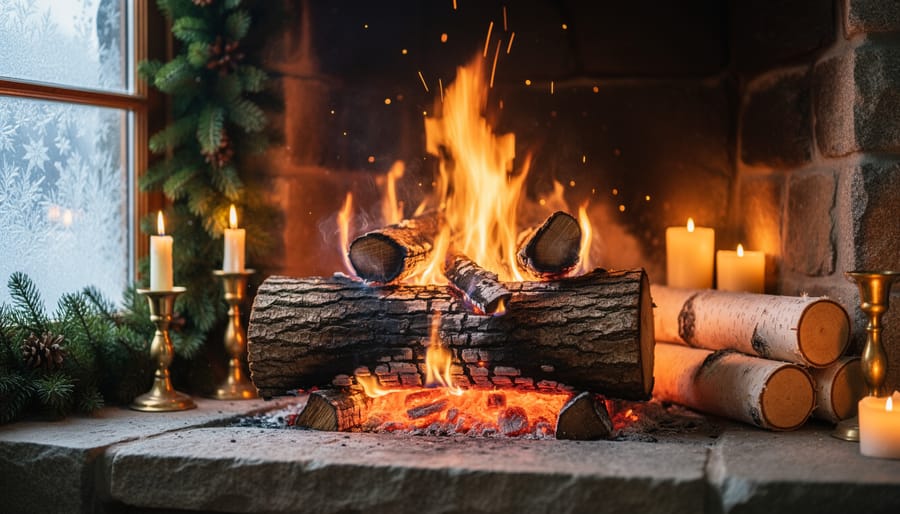
The Yule log whispers of ancient winters when families gathered around roaring hearths, burning specially chosen logs that promised protection, prosperity, and light during the darkest nights of the year. This cherished tradition, born from pagan winter solstice celebrations across Northern Europe, transformed a simple piece of wood into a powerful symbol of warmth, continuity, and hope. The carefully selected log, often from ash, oak, or birch trees, would burn throughout the twelve days of Christmas, its flames believed to ward off evil spirits while its ashes were saved to kindle next year’s fire or protect homes from lightning. As Christianity spread across Europe, the custom absorbed new meanings, blending ancient earth-centered rituals with holiday celebrations of light conquering darkness. Today, whether you’re burning an actual log in your fireplace or savoring a chocolate-covered cake roll at your festive table, the Yule log connects us to centuries of families who gathered together, sharing stories and creating memories during the magical season when frost sparkles on windows and evergreens bring life indoors.
What Is a Yule Log? More Than Just a Burning Log
Picture this: a magnificent log crackling in the hearth, its flames dancing merrily while families gather close, their faces glowing with warmth and wonder. This cherished centerpiece of winter celebration is the Yule log, a tradition steeped in centuries of magic and meaning.
The word “Yule” itself whispers of ancient times, derived from the Old Norse “jól,” referring to a midwinter festival celebrating the winter solstice. When darkness stretched longest across the land, our ancestors would select a massive log, often from oak, ash, or birch trees, and ceremoniously light it on the winter solstice eve. This wasn’t just any fire; it was meant to burn throughout the Twelve Days of Christmas, filling homes with light during the year’s darkest nights.
In its original form, the Yule log was precisely that: an actual burning log, sometimes enormous enough to require oxen for transport. Families would save a piece from each year’s log to kindle the next, creating an unbroken chain of fire and fortune across generations.
Today, the Yule log has transformed into something beautifully different yet equally beloved. You might know it as the chocolate-frosted, cream-filled dessert called a bûche de Noël, its bark-like appearance honoring the original timber tradition. Or perhaps you’ve cozied up to the famous television broadcast showing hours of a log burning in a fireplace, bringing that ancestral comfort to modern homes without chimneys.
Whether blazing in your hearth, gracing your holiday table, or flickering on your screen, the Yule log remains a symbol of warmth, light, and the enduring spirit of togetherness that defines the season.

Ancient Roots: Where the Yule Log Legend Began
The Sacred Fire of Winter Solstice
Long before twinkling lights adorned our homes, ancient families gathered in the hushed darkness of winter’s longest night, their hearts full of both reverence and hope. The choosing of the Yule log was no casual affair. Fathers and sons would venture into frost-kissed forests, searching for the perfect log, often oak or ash, hefty enough to burn through the coldest, darkest hours. These weren’t mere pieces of firewood; they were sacred vessels of light and warmth.
Once selected, the log would be blessed by the household, sometimes adorned with evergreen sprigs, holly berries, or ribbons, and often sprinkled with grain or cider as offerings of gratitude. As families prepared for their winter solstice celebrations, they would ceremoniously light the log using a fragment saved from the previous year’s fire, creating an unbroken chain of warmth through generations.
The flames that danced from this sacred wood represented more than physical heat. They symbolized the return of the sun, the promise that light would triumph over darkness, and the renewal of life itself. As sparks spiraled upward into the winter sky, they carried with them prayers, dreams, and the unshakeable belief that brighter days were coming.
When Christianity Met Ancient Custom
As Christianity spread across Europe during the medieval ages, church leaders faced a delightful dilemma: how to weave beloved pagan traditions into the new faith’s celebrations. Rather than extinguishing the warm glow of the Yule log custom, they embraced it, transforming this ancient ritual into a cherished part of Christmas festivities.
The timing proved perfect. The winter solstice celebrations naturally aligned with the Christmas season, and the Yule log found its new home within the Twelve Days of Christmas, that magical span stretching from Christmas Eve through Epiphany. Families would carefully select their log on Christmas Eve, blessing it with prayers before lighting it with a fragment saved from the previous year’s burn. This created a beautiful thread of continuity, linking one Christmas to the next in an unbroken chain of warmth and faith.
The log’s symbolism deepened under Christian tradition. Its light now represented Christ as the light of the world, burning bright against winter’s darkness. The practice of keeping the fire alive throughout the twelve days became a devotional act, with families gathering around its glow for prayers, carols, and storytelling. This gentle blending of old and new created something truly special: a tradition that honored both ancient wisdom and Christian faith, warming hearts across generations.
Yule Log Traditions Around the World
The French Bûche de Noël: From Hearth to Table
In France, the humble Yule log underwent a delicious metamorphosis, transforming from crackling firewood into the enchanting Bûche de Noël we know today. This sweet evolution began in the 19th century when French pâtissiers, inspired by the ancient hearth tradition, created a confection that captured the spirit of the burning log in edible form.
The preparation of a traditional Bûche de Noël became its own cherished ritual. Families would gather in cozy kitchens filled with the aroma of chocolate and vanilla, rolling delicate sponge cake with rich buttercream filling. Skilled hands would pipe chocolate frosting to mimic wood grain and bark, while marzipan mushrooms and powdered sugar snow adorned the surface. Some bakers even added meringue mushrooms and spun sugar moss for extra woodland magic.
Before the cake graced Christmas tables, French families still honored the original custom of burning a real log in the fireplace, often selecting it carefully on Christmas Eve and sprinkling it with wine for good fortune. The cake arrived as dessert, a beautiful centerpiece that allowed the hearth tradition to continue even as modern homes replaced grand fireplaces with modest hearths, ensuring every family could keep the Yule spirit alive.

British Yule Log Ceremonies and Superstitions
In the heart of British households, the Yule log ceremony sparkled with enchantment and hopeful wonder. Families gathered on Christmas Eve, watching with bated breath as the head of the household lit the precious log using a fragment carefully saved from the previous year’s burning. This tender moment of continuity connected generations, as if passing the flame of family warmth through time itself.
Once the fire crackled to life, magic seemed to dance in every ember. The British believed that keeping the log burning throughout the twelve days of Christmas would bring extraordinary blessings to their home. Some families treasured the charred remains, collecting the silvery ashes to sprinkle over their gardens come spring, believing they held protective powers against lightning strikes and misfortune.
Perhaps most charming was the tradition of preserving a sizable piece of the Yule log to tuck away in the rafters or beneath beds. This weathered sentinel would watch over the household throughout the year, a silent guardian promising prosperity and good fortune until its time came to kindle the next Christmas fire, beginning the beautiful cycle anew.
Scandinavian and Other European Customs
Across the snow-dusted landscapes of Scandinavia, the Yule log blazed with promises of protection and prosperity. In Norway, families carefully selected their julebukk log, often choosing one large enough to burn throughout the Twelve Days of Christmas. The longer it burned, the more blessings would grace their home. Swedish households embraced similar customs, believing that preserving a charred piece from their Yule log would shield their dwelling from lightning strikes and misfortune throughout the coming year.
The Scandinavian Christmas traditions often intertwined the Yule log with elaborate feasting rituals, where the fire’s warmth symbolized the triumph of light over winter’s darkness. In Serbia, families practiced the beautiful badnjak tradition, ceremonially bringing an oak log into their homes on Christmas Eve. This wasn’t merely wood for burning—it was a sacred guest, greeted with wine and grain, representing the tree of life itself.
Throughout these regions, children delighted in the sparks flying from the burning log, seeing in them whispers of ancestral blessings and glimpses of the year’s fortunes. These cherished customs remind us that the Yule log transcended mere practicality, becoming a luminous thread connecting families to ancient winter celebrations.
The Magic and Meaning Behind Yule Log Rituals
Choosing the Perfect Log
Selecting the perfect Yule log was never a matter left to chance in homes of old. Families approached this task with reverence, understanding that their choice would carry the household’s hopes through the darkest nights of winter. Oak stood as the favored wood, symbolizing strength and endurance, its dense fibers burning long into the night like a steadfast guardian. Ash brought protection and prosperity, while birch invited new beginnings with its paper-white bark gleaming like fresh snow.
The log itself needed to be substantial, large enough to burn throughout the Twelve Days of Christmas, filling the hearth with warmth and light. Some traditions called for a log so grand it required the whole family to drag it home together, turning the journey into a merry procession of laughter and song. This communal effort deepened the magic, weaving family bonds as tightly as the wood’s rings marked passing years. The carefully chosen log became more than fuel; it transformed into a vessel of protection, abundance, and hope.
Lighting Ceremonies and Blessings
The moment of lighting the Yule log held sacred significance, transforming an ordinary winter evening into something truly enchanted. Families preserved a charred piece from the previous year’s log, carefully stored throughout the seasons, to kindle the new flame—a beautiful symbol of continuity and protection passing from one Christmas to the next. As the patriarch or eldest family member touched the ancient ember to fresh wood, loved ones would gather close, their faces glowing in the firelight.
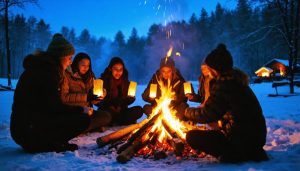
This cherished ritual of gathering around the fire brought prayers for prosperity, health, and harmony in the coming year. Voices joined in blessings, while cups were raised in heartfelt toasts to absent friends and beloved ancestors. Children watched wide-eyed as sparks danced upward, carrying wishes into the winter sky. The crackling flames created an atmosphere of warmth and togetherness, where stories flowed freely and bonds deepened with every shared moment, making the Yule log’s glow a beacon of hope and unity.

Good Fortune and Protection
Throughout the centuries, families treasured the Yule log as far more than firewood—it was a beacon of hope wrapped in magical promise. Our ancestors believed the burning log created a protective shield around their homes, warding off mischievous spirits and dark forces that prowled during winter’s longest nights. The ashes, saved with care and reverence, were scattered across fields to bless the coming harvest with abundance, or tucked beneath beds to prevent lightning strikes and household misfortunes. Some traditions held that keeping a charred piece from year to year would bring continuous prosperity, like passing good fortune from one generation to the next. Even the flickering flames themselves were read like tea leaves, with bright, steady burning foretelling wealth and happiness for all who gathered near its warmth.
Modern Yule Log Traditions: Keeping the Flame Alive
The Yule Log on Your Screen
In 1966, a television station in New York City sparked a tradition that would flicker its way into millions of hearts. WPIX realized that not everyone had a fireplace to gather around during the holidays, so they did something wonderfully simple: they filmed a burning Yule log and broadcast it on Christmas Eve. For three hours, families could gather around their television sets and experience the cozy ambiance of a crackling fire, complete with festive music filling their living rooms. What began as a local broadcast became a beloved ritual, returning year after year like an old friend bearing gifts of warmth and comfort. Today, streaming services offer endless variations of the televised Yule log, from traditional wood fires to modern twists with crackling sounds and seasonal scenery. This humble innovation transformed screens into virtual hearths, proving that the spirit of the Yule log transcends the need for an actual fireplace, bringing its ancient magic of light, warmth, and togetherness into every home.
Baking Your Own Bûche de Noël
Today’s beloved Bûche de Noël carries the ancient Yule log tradition into our kitchens, transforming sacred wood into a delightful chocolate sponge cake rolled with cream and frosted to resemble bark. Families gather around mixing bowls instead of hearths, with children eagerly helping to swirl buttercream into wood-grain patterns and dust powdered sugar like freshly fallen snow. This enchanting dessert bridges past and present, allowing us to honor our ancestors’ winter solstice rituals while creating sweet new memories. The careful decoration of meringue mushrooms and marzipan holly becomes a cherished activity, turning an afternoon of baking into storytelling time where the magic of the season comes alive through flour-dusted hands and warm ovens.
Creating New Yule Log Memories
Today’s families can embrace the Yule log tradition in delightful ways that honor the past while creating their own magical moments. Gather loved ones around a real fireplace to burn a specially chosen log, sharing stories and wishes as the flames dance. If a hearth isn’t available, craft a decorative Yule log centerpiece adorned with evergreens, ribbons, and candles to grace your holiday table. Start a cherished ritual where each family member writes down hopes for the coming year on small paper scrolls, tucking them beneath the log or around your arrangement. Let children help decorate the log with natural treasures like pinecones, holly berries, and cinnamon sticks. Even lighting special candles together while recounting the ancient legend transforms an ordinary evening into an enchanted celebration, weaving threads of history into your family’s unique tapestry of Christmas memories.
From ancient hearthside to modern mantelpiece, the Yule log has traveled through centuries, carrying with it the eternal flame of human hope and togetherness. What began as a practical winter necessity transformed into sacred ritual, then blossomed into beloved tradition, proving that the most meaningful customs adapt without losing their soul.
Whether you’re lighting a wooden log in your fireplace, savoring a chocolate-covered dessert, or watching flames dance on your television screen, you’re participating in something profoundly beautiful. You’re joining countless generations who understood that darkness is temporary, that warmth can be shared, and that gathering together makes the coldest nights bearable.
The Yule log reminds us that traditions need not remain frozen in time to stay precious. Each family can weave their own magic into this ancient custom. Perhaps you’ll carve wishes into bark, decorate your log with evergreen sprigs and crimson ribbons, or create new ceremonies around its lighting. The power lies not in perfect adherence to the past, but in honoring the timeless spirit of light, love, and continuity that connects us all across the ages.