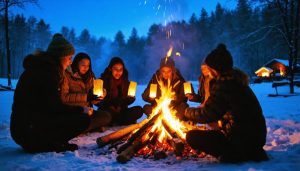
Picture a land where darkness falls at 3 PM, yet homes glow with the warmth of a thousand candles. In Sweden, Christmas isn’t merely a single day—it’s a month-long celebration woven through with ancient Nordic customs, twinkling lights, and traditions that turn the longest, darkest nights into pure magic.
From the ethereal procession of St. Lucia bearing her crown of candles through morning darkness, to families gathering around televisions at precisely 3 PM on Christmas Eve to watch Donald Duck (yes, really!), Swedish Christmas traditions blend the sacred with the delightfully quirky. The celebration begins in late November when Advent stars illuminate windows across the nation, transforming entire neighborhoods into wonderlands of soft, golden light.
Swedish Julbord tables groan under the weight of herring preparations, meatballs, ham, and saffron-infused treats, while the distinctive scent of glögg—mulled wine fragrant with cardamom and cinnamon—perfumes homes throughout December. These Swedish winter traditions speak to something deeper than mere festivity; they’re a defiant celebration of light, community, and coziness during the year’s darkest season.
Whether you’re planning to embrace these customs yourself or simply curious about how Swedes transform winter’s chill into Christmas magic, this journey through Sweden’s holiday season will illuminate traditions both ancient and modern—each one adding layers of warmth, wonder, and unmistakably Nordic charm to the most wonderful time of the year.
The Season Begins with Advent
Advent Candles and Stars Light the Way
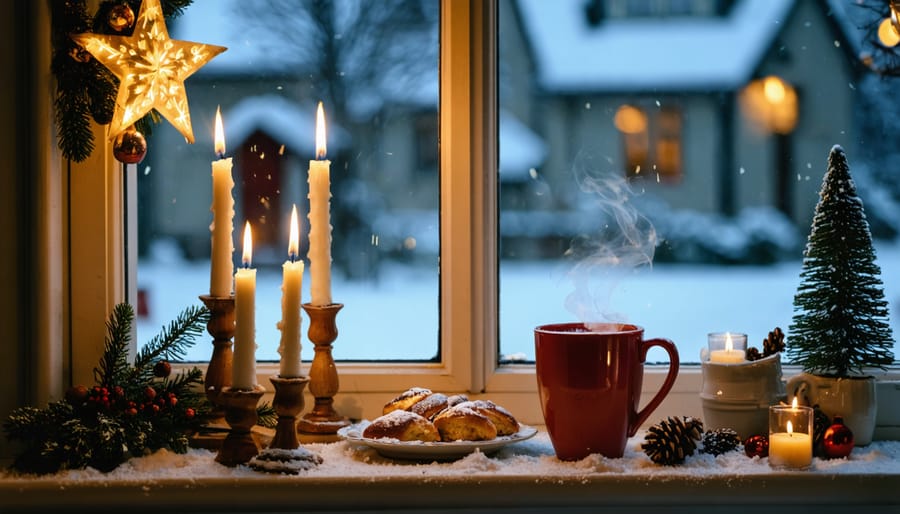
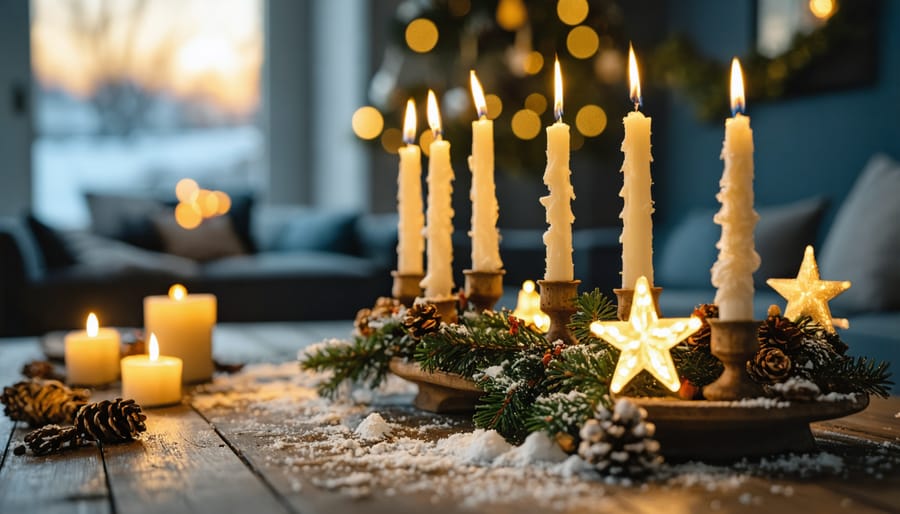
As December’s darkness settles over Sweden, homes begin to glow with the enchanting warmth of advent traditions that transform the long winter nights into something magical. The adventsljusstake, a beloved four-armed candlestick, takes its place of honor in Swedish windows, with one purple candle lit each Sunday leading up to Christmas. This simple yet profound tradition marks the passage of time, building anticipation as each flame joins the others in their gentle dance.
But perhaps nothing captures the Swedish Christmas spirit quite like the magnificent advent stars that appear in seemingly every window throughout the country. These luminous paper stars, often white or golden, cast intricate patterns of light and shadow, creating a constellation of hope along darkened streets. Families gather to hang their stars in early December, and as twilight falls each evening, neighborhoods transform into galaxies of twinkling warmth. This tradition speaks to the Swedish concept of “mysig” – that cozy, intimate atmosphere that makes the cold, dark season feel like a cherished embrace rather than something to endure.
Advent Calendars: Small Joys Leading to Christmas
In Sweden, the countdown to Christmas begins with a beloved ritual that transforms December into twenty-four days of anticipation and delight. Swedish children wake each morning to open a door on their advent calendar, revealing a piece of chocolate or a tiny treasure behind each numbered window. These magical advent calendar traditions have evolved beyond simple cardboard designs—families now choose from elaborate calendars filled with toys, books, or even tea sachets.
But the most treasured advent tradition isn’t something you can hold in your hands. Every evening at precisely 7 PM throughout December, Swedish families gather around their televisions for “Julkalendern”—the Christmas Calendar show. This beloved program airs one episode per day, creating a shared national experience that spans generations. Whether it’s animated adventures, live-action mysteries, or musical journeys, these twenty-four episodes weave stories that capture hearts and create lasting memories.
The combination of tangible chocolate calendars and the nightly TV ritual transforms the entire month into a celebration of togetherness, making the wait for Christmas Eve feel like an enchanting journey rather than simply marking time.
St. Lucia Day: A Festival of Light
The Lucia Procession
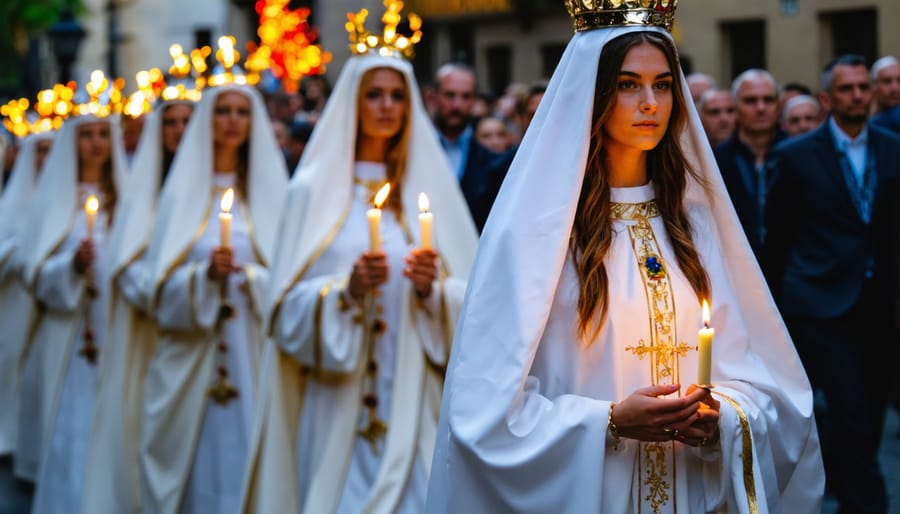
As dawn breaks on December 13th, something magical stirs throughout Sweden. In schools, churches, and workplaces across the country, a hauntingly beautiful procession begins—one that has captivated hearts for generations. This is the Lucia procession, a luminous celebration that transforms ordinary mornings into moments of pure enchantment.
At the heart of the procession walks Lucia herself, crowned with a wreath of lingering candles that glow like stars against the winter darkness. Her long white gown flows gracefully as she moves, symbolizing light and hope during the year’s darkest days. Behind her follows a train of white-robed children, girls wearing tinsel in their hair and boys donning pointed star-topped hats as “star boys,” their voices rising in harmony.
The haunting melody of “Sankta Lucia” fills the air, its Italian origins now forever woven into Swedish tradition. The song’s gentle, otherworldly quality creates an atmosphere that feels both reverent and joyful, transporting everyone back to their own childhood memories of participating in or witnessing these precious processions.
Children carry candles and offer saffron buns and gingerbread cookies, bringing warmth and sweetness to the celebration. Whether performed in a small village church or a bustling city office building, each Lucia procession carries the same magic—a tender reminder that even in darkness, there is always light, hope, and the promise of brighter days ahead.
Lussekatter: Saffron Buns for a Special Morning
As December mornings grow darker in Sweden, something magical happens in kitchens across the country—the golden glow and sweet spice of lussekatter fill homes with warmth. These saffron-infused buns, traditionally shaped into elegant S-curves resembling coiled cats or spiraling curls, mark one of Sweden’s most beloved Christmas traditions. The precious saffron threads transform simple dough into something extraordinary, creating buns with a distinctive golden hue and delicate, almost perfumed flavor that tastes like sunshine captured in bread.
Swedish families gather on December 13th, St. Lucia’s Day, for a special breakfast featuring these treasured treats, often enjoyed with steaming coffee or glögg. Children delight in the raisins nestled at each spiral’s end, like tiny jewels adorning the golden curves. The tradition of baking lussekatter together becomes its own cherished ritual—little hands helping to roll the dough, creating imperfect but heartfelt shapes, filling the kitchen with laughter and the intoxicating aroma of saffron and cardamom. These buns represent more than sustenance; they’re edible memories, connecting generations through the simple act of breaking bread together on cold winter mornings.
Christmas Eve: The Heart of Swedish Celebration
The Julbord: A Feast to Remember
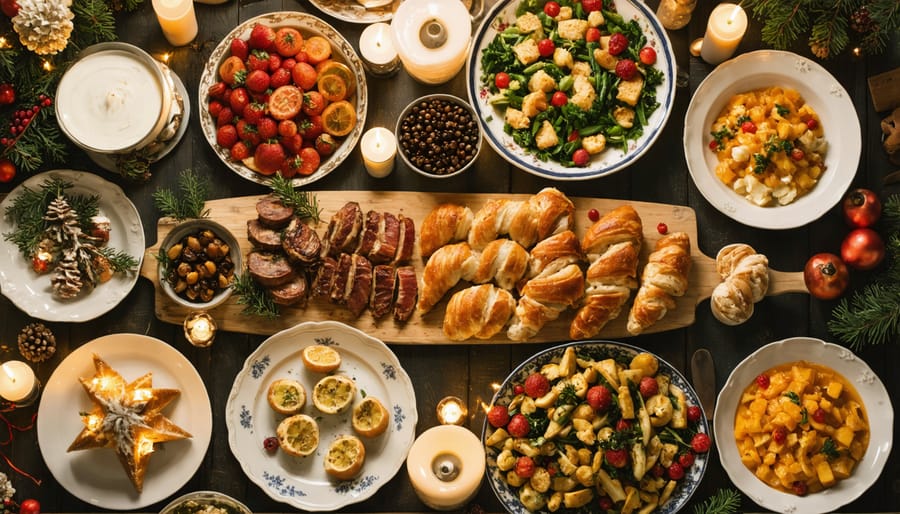
Picture a table groaning under the weight of dozens of dishes, each one more tempting than the last. This is the Julbord—Sweden’s legendary Christmas smorgasbord—and it’s a feast that transforms the simple act of dining into a celebration of abundance, tradition, and togetherness.
The Julbord isn’t just a meal; it’s a carefully orchestrated journey through Swedish culinary heritage. Families gather around tables laden with both hot and cold dishes, each one carrying memories of Christmases past. The tradition invites you to fill your plate multiple times, savoring each course at your own leisurely pace—because rushing through a Julbord would be missing the entire point of this beloved ritual.
Your culinary adventure typically begins with the sill, an array of pickled herring prepared in countless ways: mustard-dressed, onion-studded, or swimming in creamy sauces. Next come the cold cuts and salamis, followed by the iconic Jansson’s Temptation—a rich, creamy potato gratin studded with anchovies that somehow manages to taste like comfort itself.
Then the warm dishes arrive: those famous Swedish meatballs, perfectly spiced and tender; the Christmas ham glazed to glossy perfection; crispy pork ribs called revbensspjäll; and for the adventurous, lutfisk—dried cod reconstituted and served with white sauce, a polarizing dish that Swedes either adore or diplomatically avoid.
Amidst all this bounty, you’ll find warm red cabbage, golden gratins, fresh-baked bread, and an assortment of cheeses. The Julbord captures the Swedish spirit of lagom—not too little, certainly not too much, but just the right amount of everything to make your heart (and stomach) absolutely full.
Watching Donald Duck at 3 PM
At precisely 3 PM on Christmas Eve, something magical happens across Sweden. Millions of families gather around their televisions for a tradition that has become as essential as the Christmas tree itself—watching “Kalle Anka och hans vänner önskar God Jul” (Donald Duck and His Friends Wish You a Merry Christmas). This beloved broadcast, which has aired since 1960, brings the entire nation together in a shared moment of anticipation and joy.
The hour-long special features classic Disney cartoons, with Donald Duck taking center stage alongside favorites like Ferdinand the Bull and Cinderella. Children nestle close to parents on cozy sofas, often still in their festive clothes, while the aroma of Christmas dinner wafts from the kitchen. For many Swedes, Christmas doesn’t truly begin until they’ve watched this cherished program, its familiar scenes evoking memories of Christmases past and creating new ones for generations to come.
This peculiar tradition perfectly captures the Swedish spirit—finding warmth and togetherness in simple pleasures. It’s a pause button on the holiday hustle, where nearly half the country shares the same nostalgic experience simultaneously, united by cartoon ducks and childhood wonder.
Jultomten Brings the Gifts
In the heart of Swedish Christmas magic lives Jultomten, a kindly figure dressed in red who brings joy to children across the nation on Christmas Eve itself. Unlike his gift-giving counterparts in other countries who arrive under cover of midnight, Jultomten makes his appearance while families are still awake, creating an enchanting moment that children anticipate with breathless excitement.
The tradition unfolds with a characteristic knock at the door during the evening hours. When someone answers, they’ll hear Jultomten’s cheerful voice asking, “Finns det några snälla barn här?” – “Are there any nice children here?” This playful inquiry sets little hearts racing as children rush to prove their good behavior throughout the year. Sometimes Jultomten appears as a family friend or neighbor in disguise, complete with a flowing white beard and a large sack of presents slung over his shoulder.
What makes this tradition particularly magical is its interactive nature. Children might recite poems, sing songs, or demonstrate their best manners before receiving their gifts. Jultomten often engages in warm conversation, asking about the year’s achievements and sharing gentle wisdom before distributing presents from his seemingly bottomless sack.
This face-to-face encounter with Christmas magic creates memories that shimmer through the years, embedding the wonder of the season deep in children’s hearts and keeping the spirit of generosity and kindness alive for generations to come.
The Magic of Swedish Christmas Decorations
Natural Elements and Rustic Charm
In Swedish homes, Christmas decorations tell a story of forests, fields, and the timeless beauty of the Nordic landscape. Rather than glittering tinsel and plastic ornaments, Swedish families adorn their homes with treasures drawn straight from nature’s winter palette.
Delicate straw ornaments take center stage—goats, stars, and hearts woven from golden wheat stalks that seem to capture the glow of candlelight. These julbockar (Christmas goats) and intricate straw designs have graced Swedish homes for generations, their simple beauty a testament to peasant traditions that honored the harvest. You’ll find them nestled among evergreen branches, their rustic charm softening the dark winter nights.
The beloved Dala horse, painted in cheerful red with folk-art flourishes, brings a splash of color and national pride to the season. These hand-carved wooden treasures from Dalarna province aren’t just decorations—they’re symbols of Swedish craftsmanship and heritage, passed down through families like heirlooms.
Fresh-cut pine, spruce, and fir branches fill homes with their crisp, forest-fresh scent, while lingonberry sprigs and dried orange slices add natural pops of crimson and amber. This connection to the land reflects Sweden’s deep respect for nature, bringing the peaceful beauty of winter woodlands indoors. Like many Christmas tree traditions worldwide, Swedish decorating celebrates the season’s organic splendor.
Candles Everywhere: Creating Hygge
In the depths of Swedish winter, when darkness wraps around the day at three in the afternoon, Swedes turn to a timeless tradition that transforms their homes into havens of warmth: candles, and lots of them. This isn’t merely about decoration—it’s about creating *hygge* (or as Swedes say, *mysig*), that soul-warming coziness that makes the long winter nights feel like a tender embrace.
Walk through any Swedish home during December, and you’ll discover candles flickering in every window, casting their golden glow across snow-dusted streets. Electric advent stars hang in windows, while candelabras grace dining tables, and tea lights dot mantels and windowsills. The effect is nothing short of magical—a constellation of tiny flames pushing back against the winter darkness.
This candlelit tradition speaks to something deeper than mere ambiance. It’s about bringing light into the darkness, both literally and metaphorically, creating warmth during the coldest season. Swedish families gather around these glowing beacons, sharing stories, sipping warm *glögg*, and savoring the simple pleasure of being together. The dancing flames become companions through December’s long nights, reminding everyone that even in darkness, there is always light, warmth, and hope.
Sweet Traditions: Baking and Treats
Seven Kinds of Cookies
In Swedish homes, the sweet aroma of Christmas begins weeks before the holiday arrives, as families gather in warm kitchens to honor the beloved tradition of *sjuhuset* – the baking of at least seven different types of Christmas cookies. This cherished custom transforms ordinary December days into magical moments filled with flour-dusted countertops, the clinking of cookie cutters, and the laughter of generations working side by side.
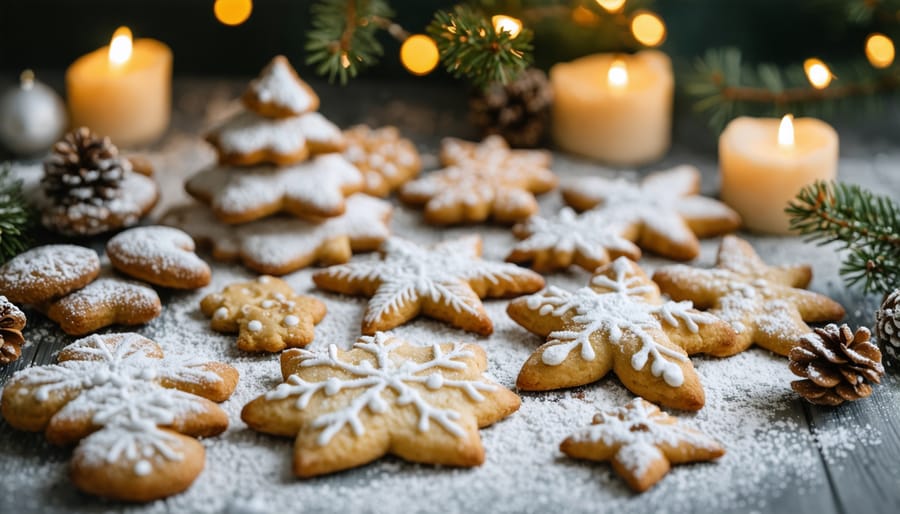
The star of Sweden’s cookie collection is undoubtedly *pepparkakor*, thin and crispy gingerbread cookies spiced with cinnamon, ginger, and cloves. Children delight in cutting these into hearts, stars, and little goats, while folklore whispers that if you place a pepparkakor in your palm and make a wish, then tap it gently with your finger, your wish will come true if it breaks into exactly three pieces.
Golden *saffron buns*, shaped into their distinctive curled “S” forms and dotted with raisins, bring sunshine to the darkest winter days. Buttery *spritz cookies*, pressed through special molds into delicate wreaths and trees, join the festive lineup alongside *drömmar* (dreamy vanilla cookies that melt on your tongue), *kokosmakroner* (chewy coconut macaroons), and *chokladbollar* (no-bake chocolate balls rolled in pearl sugar).
The tradition of baking seven varieties symbolizes abundance and hospitality, ensuring that every guest who crosses your threshold during the Christmas season receives a proper Swedish welcome.
Gingerbread Houses and Cookie Decorating
The sweet scent of ginger, cinnamon, and cardamom fills Swedish homes as families gather to create their cherished pepparkakshus—elaborate gingerbread houses that transform kitchens into workshops of wonder. This beloved tradition brings generations together, with grandmothers guiding small hands as they pipe white icing “snow” onto spiced cookie walls and carefully place colorful candies along rooftops. Children’s eyes light up as they construct miniature villages, complete with sugar-dusted pathways and gumdrop gardens. The process itself becomes the treasure—sharing stories, tasting broken cookies, and watching creativity bloom. These gingerbread masterpieces often grace dining tables throughout December, serving as edible centerpieces that remind everyone of the magic created together. Beyond architectural confections, Swedish families also decorate traditional pepparkakor cookies in festive shapes, transforming simple dough into stars, hearts, and goats that capture the season’s enchantment.
Bringing Swedish Christmas Magic to Your Home
You don’t need a plane ticket to Stockholm to embrace the enchanting spirit of a Swedish Christmas—just an open heart and a willingness to slow down and savor the season’s simple pleasures. The beauty of Swedish traditions lies in their accessibility and their gentle reminder that the most meaningful celebrations come from togetherness, not extravagance.
Start by bringing the soft glow of candlelight into your home. Scatter white pillar candles throughout your living spaces, especially near windows, creating that characteristic Swedish warmth that beckons passersby. On December 13th, honor St. Lucia morning with a breakfast of saffron buns and hot cocoa, perhaps even fashioning a simple crown of greenery with candles for your children to wear as they serve breakfast in bed.
Transform your Christmas Eve into a Swedish-style celebration by making it the main event rather than Christmas Day. Gather loved ones for a festive smorgasbord dinner, featuring pickled herring, meatballs, and ham alongside traditional sides. Don’t forget to queue up Donald Duck’s Christmas special—it may seem quirky, but there’s something wonderfully unifying about this beloved tradition that connects families across oceans.
Embrace the concept of “mysig”—that untranslatable Swedish coziness—by creating intentional moments of calm amid the holiday rush. Dim the lights, light candles, serve warm glogg with blanched almonds and raisins, and simply be present with those you love. Like many European Christmas traditions, Swedish customs remind us that Christmas magic isn’t manufactured—it’s cultivated through ritual, presence, and the warmth we share with one another.
As snowflakes dance against windowpanes and candles flicker in the gathering darkness, Swedish Christmas traditions remind us of what truly matters during this enchanted season. These cherished customs aren’t about grand gestures or elaborate displays—they’re about creating pockets of warmth and wonder in the coldest, darkest time of year. From the gentle glow of Lucia crowns to the comforting aroma of saffron buns wafting through the kitchen, Swedish traditions invite us to slow down, gather close, and savor life’s simple pleasures.
There’s something beautifully intentional about how Swedes celebrate Christmas. Every candle lit in an Advent star, every batch of pepparkakor cookies shaped with little hands, every moment spent around the julbord table tells a story of connection—to family, to heritage, and to the magic of the season itself. These traditions have endured through generations because they nourish something deep within us: our need for light when the world grows dark, for togetherness when life pulls us apart, for joy that doesn’t depend on anything more than being present with those we love.
May your own holiday season be filled with the same warmth and wonder that glows through Swedish Christmas celebrations. God Jul, and may your home sparkle with laughter, love, and the timeless magic of traditions both old and new.