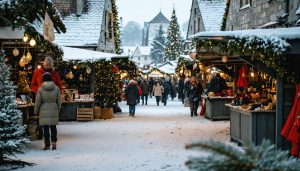
Christmas arrives dressed in countless costumes across our beautiful globe. From the candlelit windows of Sweden to the rollerskating priests of Venezuela, from Japan’s beloved KFC feasts to Ethiopia’s ancient white-robed processions, the world celebrates this magical season in 75 wonderfully different ways that will transform how you see the holidays forever.
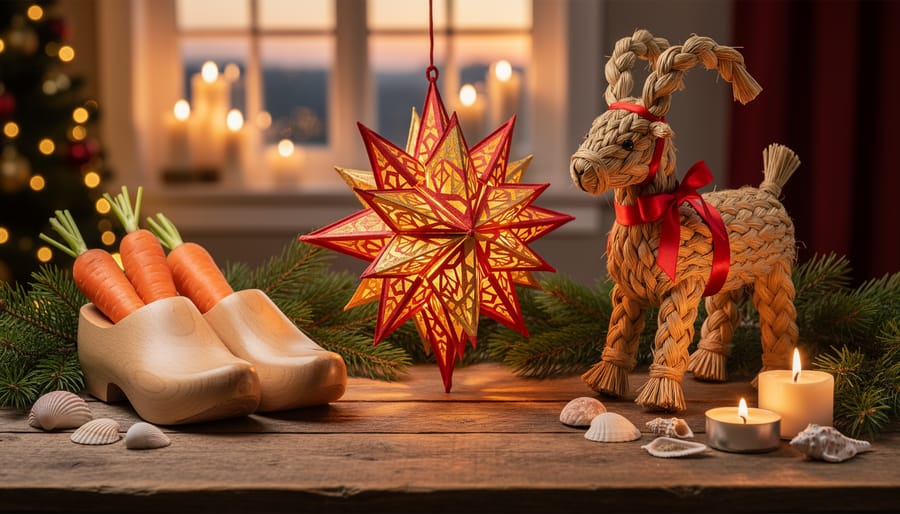
Picture children in the Netherlands leaving carrots in their wooden shoes for Sinterklaas’s horse, while halfway around the world, Filipino families craft glowing star lanterns called parols that illuminate entire neighborhoods. Imagine Icelandic youngsters anticipating visits from thirteen mischievous Yule Lads, each arriving on successive nights with tricks and treats, as Australian families gather for beach barbecues under the summer sun.
These traditions reveal something profound about human nature: our universal longing to gather, celebrate, and create moments of wonder, even as we express that longing through delightfully distinct customs shaped by geography, history, and culture. Whether you’re seeking fresh inspiration for your own family celebrations, hoping to honor your heritage, or simply curious about how others mark this special season, this journey through 75 global Christmas traditions promises to fill your heart with newfound appreciation for the spectacular diversity of human celebration.
Each tradition carries stories passed down through generations, whispered by grandmothers, enacted by children, and cherished by communities who refuse to let the modern world erase their unique magic. Welcome to Christmas as you’ve never experienced it before.
European Christmas Magic: Old World Traditions That Started It All
Nordic Wonderlands: Scandinavia’s Cozy Christmas Customs
As snowflakes blanket the Scandinavian landscape in pristine white, the Nordic countries embrace Christmas with traditions that transform the darkest time of year into a season of candlelight, warmth, and togetherness. Here, hygge isn’t just a word—it’s a way of life that reaches its peak during the yuletide season.
In Sweden, December 13th marks the enchanting celebration of Saint Lucia Day, where young girls don white gowns and crowns of flickering candles, singing hauntingly beautiful songs through darkened homes and streets. This festival of light brings hope and brightness during the longest nights, a tradition that has captured hearts for generations.
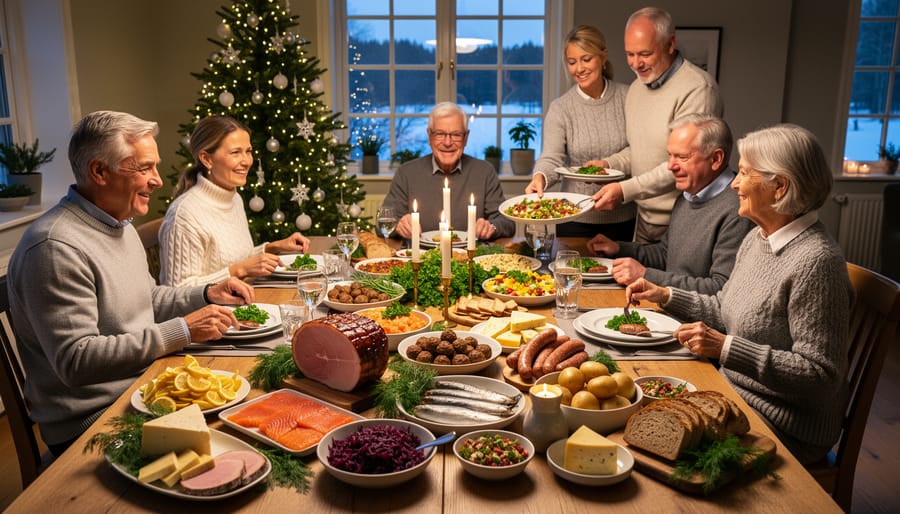
The Christmas feast, known as Julbord in Sweden and Julebord in Norway, showcases an abundant smorgasbord of Nordic delicacies. Picture tables groaning under the weight of pickled herring, gravlax, meatballs, sausages, and an array of cheeses and breads. Families gather around these lavish spreads, savoring traditional dishes while creating memories that warm the soul long after winter passes.
Finland holds a special place in Christmas lore as the official homeland of Santa Claus, who resides in Rovaniemi, Lapland. Finnish families visit cemeteries on Christmas Eve, placing candles on loved ones’ graves, creating fields of twinkling lights that honor both past and present. Later, they enjoy a traditional sauna before the main celebration—a purifying ritual that prepares body and spirit for the festivities ahead.
Denmark and Norway share a beloved Christmas Eve tradition: gathering the entire family to watch the same holiday television special year after year. In Denmark, “Dinner for One” has become as essential as the roast duck on the table, while Norwegians tune into Disney’s Christmas show with the devotion of a sacred ritual.
Iceland’s thirteen Yule Lads bring mischief and merriment throughout December, each visiting children on successive nights leading up to Christmas. Unlike the single-night visits common elsewhere or the cracker-pulling traditions found in British celebrations similar to Christmas crackers, these playful characters extend the magic across two full weeks of anticipation and delight.
Central European Charm: Germany, Austria, and Switzerland
Step into the snow-dusted wonderlands of Germany, Austria, and Switzerland, where Christmas feels like wandering through a living snow globe. These Alpine treasures gave the world some of our most beloved holiday traditions, and experiencing them in their birthplace is pure magic.
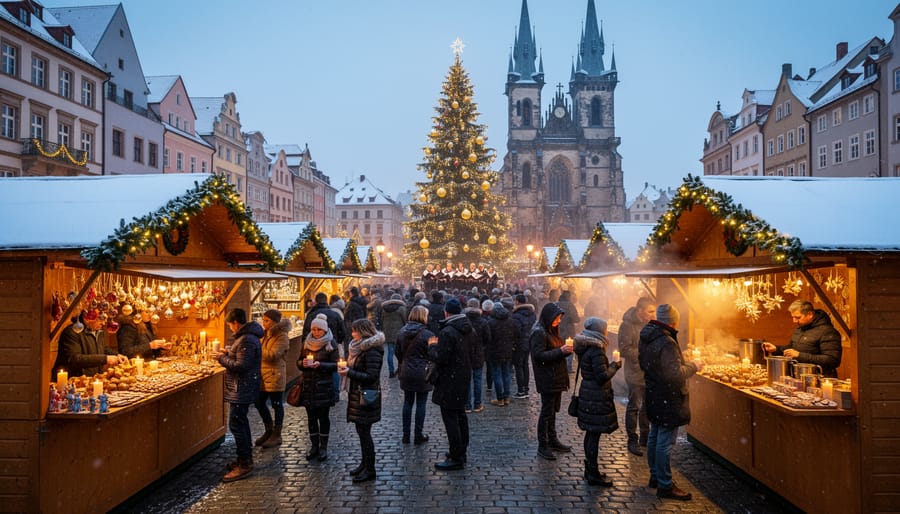
Picture yourself strolling through twinkling Christkindl markets, where the air swirls with cinnamon, roasted almonds, and mulled wine. Wooden stalls overflow with hand-carved ornaments, gingerbread hearts, and delicate glass baubles. These centuries-old markets transform town squares into enchanted villages, where German Christmas traditions come alive through craftsmen demonstrating age-old techniques and carol singers warming hearts with familiar melodies.
The tradition of Advent calendars originated here, originally simple chalk marks counting down to Christmas. Today’s chocolate-filled versions pale in comparison to the anticipation German children felt opening paper windows to reveal biblical scenes and winter landscapes, building excitement one tiny door at a time.
These regions also gifted us the Christmas tree tradition. Germans brought evergreens indoors centuries ago, decorating them with apples, nuts, and candles—a custom that would eventually sparkle across the globe.
But not all Central European traditions feel purely angelic. The Austrian Krampus tradition brings delicious shivers, as this horned, furry creature accompanies St. Nicholas on December 5th, rattling chains and carrying birch switches to remind mischievous children to behave. Krampusnacht celebrations feature costumed parades where these fearsome figures prowl the streets—a thrilling counterbalance to Christmas sweetness that reminds us that a little healthy fear can inspire virtue alongside Santa’s rewards.
Mediterranean Celebrations: Southern Europe’s Unique Festivities
The sun-drenched shores of Southern Europe shimmer with their own magical Christmas customs, where ancient folklore dances alongside beloved winter celebrations. In these Mediterranean lands, the festivities extend well beyond December 25th, weaving tales of witches, kings, and mischievous creatures into the fabric of the season.
Italian Christmas celebrations carry a delightful twist with the legend of La Befana, a kindly witch who arrives on the night of January 5th. Flying on her broomstick from house to house, this beloved crone fills stockings with sweets for good children and coal for naughty ones. According to folklore, La Befana missed the chance to visit baby Jesus with the Three Wise Men, and now she searches every home, hoping to find the Christ child while leaving gifts along the way.
Spain and many Latin American countries save their grandest gift-giving for Día de los Reyes Magos, or Three Kings Day, on January 6th. Children leave their shoes by the window filled with straw for the wise men’s camels, waking to discover presents and enjoying the traditional Roscón de Reyes, a ring-shaped cake hiding special surprises inside.
Greek families once told whispered tales of the Kallikantzaroi, impish goblins who emerge from the earth during the twelve days of Christmas, causing playful havoc. To ward them off, households would burn old shoes, hang sausages in the chimney, or keep a fire blazing throughout the season.
Meanwhile, Portuguese traditions include the Missa do Galo, or Rooster’s Mass, celebrated at midnight on Christmas Eve, named for the rooster who supposedly announced Christ’s birth at the stroke of midnight.
The Americas: Where Old Meets New
Latin American Festivities: Las Posadas and Beyond
From the warm shores of Brazil to the mountain villages of Mexico, Latin America transforms Christmas into a symphony of light, music, and community celebration that stretches far beyond a single December evening.
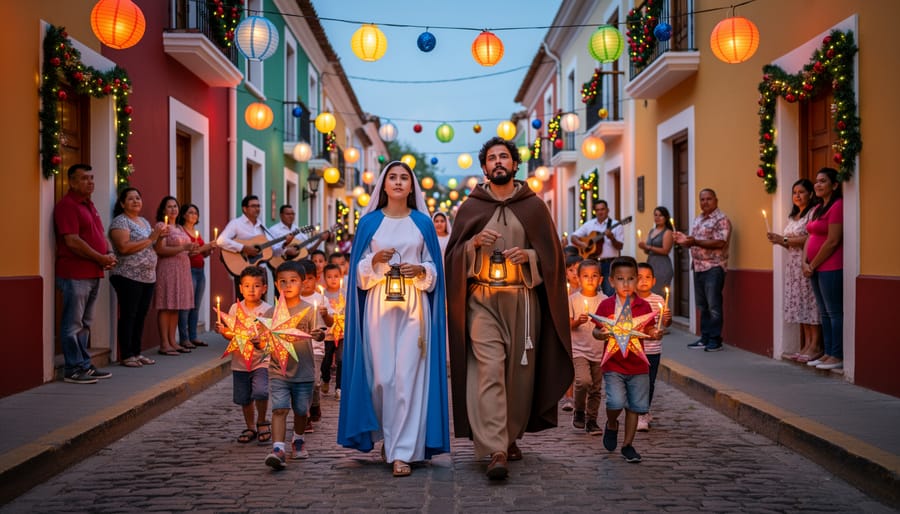
In Mexico, Las Posadas recreates Mary and Joseph’s search for shelter through nine consecutive nights of candlelit processions. Neighbors travel from house to house, singing traditional verses as they seek lodging, only to be turned away until reaching the designated home. There, the doors swing open to reveal piñatas shaped like stars, steaming cups of ponche fruit punch, and tables laden with tamales and buñuelos. Children carry luminarias and sparklers, their faces glowing with anticipation as they wait their turn to break the piñata filled with sugarcane, oranges, and peanuts.
Colombia illuminates the season during Día de las Velitas on December 7th, when millions of candles and paper lanterns transform streets, windowsills, and entire neighborhoods into rivers of flickering light. Families gather at dusk to honor the Virgin Mary, arranging intricate designs with their candles while sharing natilla custard and buñuelos with neighbors who stop by to admire the displays.
Venezuela adds wheels to the festivities with their beloved patinatas tradition, where entire families roller skate to early morning Christmas Mass. City streets close to traffic as communities glide together through the pre-dawn darkness, church bells ringing out to guide skaters safely to their destination.
In Brazil, Papai Noel might arrive wearing silk suits rather than heavy winter clothing, greeting children on sun-drenched beaches where families feast on tender turkey, colorful rice, and fresh tropical fruits. The celebration extends through midnight Mass, fireworks bursting over coastal waters as the Southern Hemisphere summer embraces this joyous season with open arms and warm breezes.
North American Traditions: From Canada to the Caribbean
From the snow-dusted streets of Canada to the sun-kissed shores of the Caribbean, North America celebrates Christmas with a beautiful tapestry of traditions that reflect its rich multicultural heritage.
In Canada, the holiday season embraces diversity with open arms. French-Canadian families gather for réveillon, a festive midnight feast following Christmas Eve Mass, where tourtière meat pies and bûche de Noël grace tables laden with generations of recipes. Meanwhile, in Newfoundland, mummering transforms neighbors into mysterious masked visitors who dance and sing at doorsteps, their identities hidden beneath colorful disguises until hot cocoa and Christmas cake are shared. Ukrainian Canadians honor their heritage with the twelve-dish Holy Supper on Christmas Eve, placing hay beneath the tablecloth to remember the manger, while Indigenous communities blend ancient winter solstice ceremonies with newer Christmas customs, creating meaningful celebrations that honor both past and present.
Across the United States, regional traditions paint the country in holiday hues as varied as its landscape. New England towns illuminate luminaria-lined streets, while Southern families craft elaborate gingerbread houses that would make any architect envious. In the Southwest, farolitos cast their gentle glow along adobe walls, and Hawaiian families celebrate with shaka Santa riding his outrigger canoe. From Kentucky’s Papaw’s candy-making traditions to Pennsylvania Dutch Moravian star ornaments, each region adds its unique flavor to the Christmas story.
The Caribbean transforms the season into a rhythmic celebration where African, European, and indigenous traditions dance together under palm trees. Junkanoo festivals explode through Bahamian streets on Boxing Day with elaborate costumes, cowbells, and goatskin drums creating an infectious beat. Trinidad hosts parang music sessions where Spanish-influenced carols blend with calypso rhythms, while Jamaican families prepare sorrel drink and Christmas pudding, gathering for Grand Market shopping adventures on Christmas Eve. Here, Christmas means beach picnics, outdoor dancing, and celebrating where winter’s chill never reaches but holiday warmth flows abundantly.
Asian Christmas Celebrations: Unexpected Holiday Joy
East Asian Interpretations: Japan, South Korea, and China
In East Asia, Christmas has been reimagined through a delightfully unexpected lens, where Western traditions blend with local culture to create celebrations that are uniquely their own.
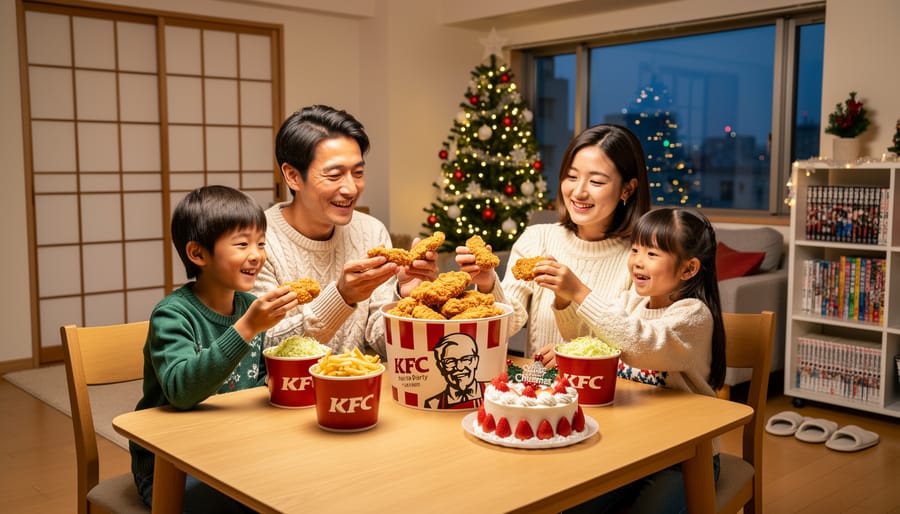
Japan’s most famous Christmas tradition might just make you smile: enjoying a bucket of Kentucky Fried Chicken for Christmas dinner. This quirky custom began in 1974 when KFC launched their brilliant “Kentucky for Christmas” marketing campaign. Today, Japanese families order their holiday chicken weeks in advance, with some locations taking reservations as early as October. The red-and-white buckets have become as iconic to Japanese Christmas as turkey is to American Thanksgiving, and the Colonel himself often dons a Santa suit for the occasion. Beyond the fried chicken phenomenon, Japanese couples view Christmas Eve as one of the most romantic nights of the year, exchanging gifts and enjoying illuminated winter displays that transform cities into glittering wonderlands.
In South Korea, Christmas maintains its romantic overtones while also honoring its religious roots, as Christianity holds significant influence in the country. Young couples dress in matching outfits and stroll through elaborately decorated shopping districts, where towering Christmas trees compete with neon lights for attention. The holiday feels more like Valentine’s Day, with restaurants fully booked and special couple packages offered everywhere. Meanwhile, churches overflow with midnight services that blend traditional hymns with contemporary K-pop influenced worship songs.
China, where Christmas isn’t an official holiday, has embraced the festive season in major cities as a time for gift-giving and commercial celebration. Apples wrapped in colorful paper have become popular Christmas Eve gifts, as the Mandarin word for apple sounds similar to the word for peace. Shopping malls feature elaborate decorations and Santa appearances, while young people exchange gifts and gather for parties that celebrate friendship rather than religious tradition, creating their own meaningful interpretation of holiday cheer.
Southeast Asia and Beyond: The Philippines, India, and More
In the Philippines, the magic of Christmas arrives before dawn breaks. For nine consecutive mornings leading up to Christmas Eve, Filipino families gather for Simbang Gabi, the treasured tradition of attending pre-dawn Mass at 4 or 5 a.m. The streets come alive in the early darkness as communities walk together toward candlelit churches, their voices joining in familiar carols. After each service, families share traditional breakfast treats like bibingka, a warm rice cake cooked over charcoal and topped with butter and cheese, or puto bumbong, purple rice steamed in bamboo tubes and sprinkled with coconut and sugar. Legend holds that completing all nine masses means your Christmas wish will come true, though most Filipinos will tell you the true gift lies in the shared devotion and sense of community that fills these sacred mornings.
Across the waters in India, Christian communities bring their own distinct flavors to Christmas celebrations. In Goa, families decorate their homes with vibrant paper lanterns shaped like stars, called “farol,” which illuminate streets and doorways throughout the season. The tropical climate transforms traditional celebrations into uniquely Indian experiences, where Christmas dinner might feature spicy vindaloo alongside roasted meats, and carolers move through neighborhoods under palm trees strung with twinkling lights. In Kerala, Christians prepare the house with thorough cleaning and new clothes, then attend midnight Mass where ancient Syrian Christian traditions blend with modern celebration.
In neighboring countries, Christmas takes on local character too. Indonesian Christians in places like North Sulawesi and Papua celebrate with elaborate nativity plays and church processions, while Vietnamese Catholics mark the season with colorful parades and elaborate living nativity scenes. Each tradition carries the warmth of community, the joy of faith, and the beauty of cultures that have woven Christmas into their own unique tapestries, proving that the spirit of the season transcends geography and speaks a universal language of love and togetherness.
African Christmas: Faith, Family, and Festive Feasts
West and East African Customs
When Christmas arrives in West and East Africa, the celebrations shimmer with unique warmth that reflects both deep faith and sun-drenched joy. In Nigeria, carol services transform into spectacular community events where voices rise in harmonious praise, blending traditional hymns with local languages and rhythms. Churches overflow with families dressed in their finest attire, creating a tapestry of vibrant colors and patterns that dance in the candlelight.
Journey to Ethiopia, where Christmas, known as Ganna, arrives on January 7th following the ancient Julian calendar. Worshippers dressed in white traditional garments gather before dawn, some having fasted for forty days, to participate in church services that last for hours. The faithful play a traditional hockey-like game also called Ganna afterward, their laughter echoing across the highlands as children chase the wooden ball with curved sticks.
Along Kenya’s stunning coastline, Christmas takes on a decidedly beachy character. Families gather on golden sands for festive picnics, where the sound of carols mingles with ocean waves. The Christmas spirit feels delightfully different when celebrated barefoot, with palm trees swaying overhead instead of pines.
South Africa embraces its summer Christmas with equal enthusiasm, hosting outdoor braais where families gather around grills, sharing meals under brilliant blue skies. Many communities organize carol singing by candlelight in parks and gardens, creating magical evenings where jasmine-scented air carries voices singing both English and Afrikaans carols. It’s a beautiful reminder that Christmas joy transcends seasons and borders.
North African and Island Traditions
In the warmth of Egypt, Coptic Christians celebrate Christmas on January 7th, following the ancient Julian calendar. Families fast for 43 days before the holiday, abstaining from meat and dairy, which makes the Christmas feast even more spectacular. After attending midnight mass at candlelit churches adorned with nativity scenes, families gather for fatta—a traditional dish of rice, bread, and garlic-infused meat that fills homes with mouthwatering aromas. Children receive new clothes called the Feast Robe, and the celebration extends for two joyous weeks.
On the enchanting island of Madagascar, Christmas arrives during the summer season, transforming the holiday into a vibrant outdoor celebration. Families decorate their homes with tropical flowers and palm leaves, creating a unique blend of traditional Christmas spirit and island charm. The highlight is the nocturnal Christmas Eve service, where communities walk together under starlit skies to church, carrying lanterns that flicker like fireflies. After the service, everyone shares a festive meal featuring romazava, a flavorful meat stew, and rice—the island’s staple food.
In Morocco, while Christmas isn’t widely celebrated, expatriate communities and local Christians create intimate gatherings that blend North African hospitality with holiday traditions. These smaller celebrations remind us that the magic of Christmas transcends borders, bringing people together wherever they call home during this special season.
Oceania’s Summer Christmas: Down Under Celebrations
Australian and New Zealand Beach Festivities
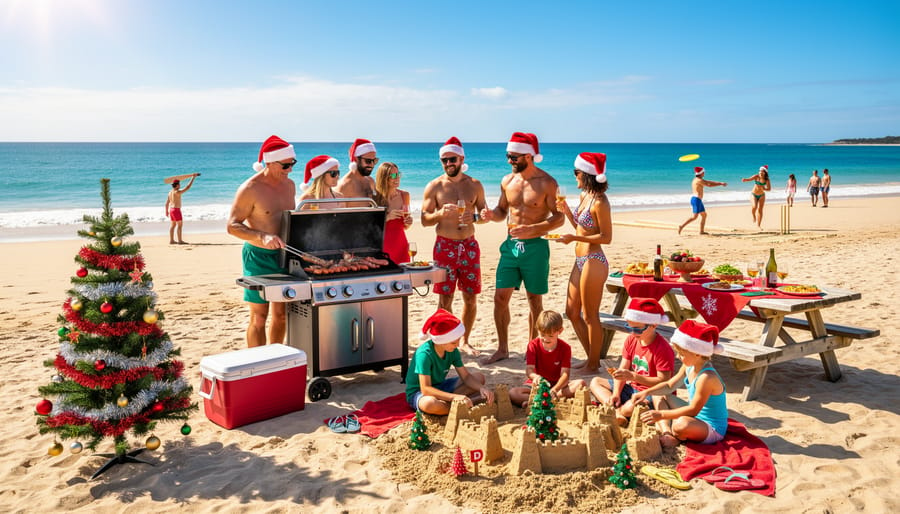
While much of the Northern Hemisphere bundles up in scarves and mittens, Australia and New Zealand celebrate Christmas in glorious summer sunshine. The Australian summer Christmas transforms beaches into festive gathering places where families spread picnic blankets on golden sand, sharing cold seafood platters and firing up barbecues laden with prawns and steak. The iconic Carols by Candlelight events illuminate warm December evenings across both countries, with thousands gathering in parks and amphitheaters to wave flickering candles and sing traditional carols beneath star-studded skies. In Sydney, families flock to Bondi Beach where Santa arrives on a surfboard, delighting children who’ve traded snow boots for flip-flops. New Zealanders embrace outdoor Christmas concerts in botanical gardens, while backyard cricket matches become cherished Boxing Day traditions. Many families enjoy Christmas lunch outdoors, decorating native pohutukawa trees with twinkling lights, creating a uniquely Southern Hemisphere celebration that honors tradition while embracing the season’s sun-drenched joy.
Pacific Island Christmas Magic
Where turquoise waters meet tropical breezes, Pacific Island nations celebrate Christmas with a delightful fusion of Christian faith and ancient island heritage. In Hawaii, the Mele Kalikimaka spirit fills the air as families gather for luaus featuring kalua pig alongside traditional holiday fare, while keiki (children) eagerly await Santa arriving by outrigger canoe rather than sleigh. Churches overflow with worshippers wearing flower leis and aloha shirts, their voices raised in carols sung in Hawaiian that echo across moonlit beaches.
Fiji’s Christmas celebration bursts with color as villages prepare lovo feasts, where food cooks underground in earth ovens, creating a smoky-sweet aroma that mingles with frangipani blossoms. Families attend midnight services before gathering for festive meals of fish, taro, and cassava, while children perform traditional meke dances retelling the nativity story through rhythmic movements passed down through generations.
Throughout Polynesia, Christmas trees might be coconut palms adorned with seashells and tropical flowers, while Santa trades his red velvet suit for lighter attire suited to balmy December weather. These island traditions remind us that Christmas magic transcends snow and fireplaces, thriving just as beautifully beneath swaying palms and starlit skies.
Middle Eastern Christmas: Ancient Lands, Timeless Traditions
Bethlehem and the Holy Land
In the very place where the Christmas story began, Palestinian Christians keep alive traditions that stretch back centuries, creating a profound connection between ancient faith and modern celebration. The city of Bethlehem transforms into a glowing beacon of hope each December, welcoming pilgrims from across the globe who journey to walk the same streets where Mary and Joseph once sought shelter.
The crown jewel of Bethlehem’s Christmas celebrations is the magnificent midnight mass held at the Church of the Nativity, built over the grotto believed to be Christ’s birthplace. As church bells ring out across the starlit hills, thousands gather in Manger Square, their faces illuminated by twinkling lights and flickering candles. The atmosphere pulses with anticipation as choirs sing hymns in Arabic, Latin, and Greek, their voices carrying centuries of devotion through the crisp night air.
Palestinian families honor Christmas with customs passed down through generations. Homes are adorned with olive wood nativity scenes, hand-carved by local artisans whose craft has endured for hundreds of years. On Christmas Eve, children eagerly await Baba Noel, while families feast on traditional dishes like maqluba and stuffed lamb, served alongside sweet ma’amoul cookies filled with dates and nuts.
The season extends beyond December 25th, as Eastern Orthodox communities celebrate on January 7th, doubling the joy and festivities. Throughout the Holy Land, ancient monasteries light up with special services, creating a tapestry of traditions that honor both the sacred and the celebratory.
Lebanon, Syria, and Armenia
In the lands where ancient cedar trees once whispered stories to the stars, Christmas unfolds with a tapestry of traditions as rich and layered as the region’s history itself. The Maronite Christians of Lebanon embrace the season with a special devotion, beginning their celebrations with the Feast of Saint Barbara on December 4th. Children dress in costumes and go door to door, much like Halloween, receiving treats while families prepare wheat berry pudding called burbara, symbolizing abundance and hope.
As December 25th approaches, Lebanese homes fill with the aroma of traditional feasts. Families gather for elaborate meals featuring kibbeh, stuffed grape leaves, and sweet pastries dripping with honey. The midnight Mass becomes a moment of pure magic, with churches adorned in candlelight and the faithful singing ancient hymns that echo through stone corridors.
In Syria, Orthodox Christians maintain their cherished customs despite modern challenges. The smallest child in each family receives the honor of lighting the Christmas bonfire in the courtyard, while everyone gathers around singing hymns. According to beloved tradition, if the fire burns to ashes, the family can expect blessings throughout the coming year.
Armenian communities celebrate Christmas on January 6th, combining the Nativity with Epiphany in a single, magnificent observance. This unique timing connects them to the earliest Christian traditions. Armenian churches glow with hundreds of candles as priests in ornate vestments lead services filled with haunting melodies. Families break their fast with a celebratory meal of rice, fish, and ghapama, a pumpkin dish that represents joy itself.
Bringing the World Home: How to Incorporate Global Traditions into Your Celebration
The magic of Christmas grows richer when we weave threads from distant lands into our own celebrations. You needn’t travel the world to bring its wonder home—these global traditions adapt beautifully to any family’s festive season.
Begin with your table. Consider adopting Mexico’s tradition of Noche Buena by gathering loved ones for a late-night feast on Christmas Eve, perhaps incorporating traditional Christmas foods from cultures that resonate with your family. Try baking German lebkuchen cookies or Swedish saffransbullar to fill your home with new, enchanting aromas that tell stories of faraway kitchens.
Transform your December evenings with the Filipino tradition of Simbang Gabi—nine days of predawn gatherings. Adapt this by creating your own countdown ritual: light candles each night, share stories, or read holiday tales from different cultures together. Children especially treasure these quiet moments of anticipation.
Embrace the Icelandic Jólabókaflóð, or Christmas Book Flood, by gifting books on Christmas Eve and spending the evening reading together in cozy pajamas with hot chocolate. This simple tradition creates memories that linger far longer than any electronic gadget.
For a touch of Ukrainian magic, add a spider ornament to your tree and share the legend of the Christmas spider who wove glittering webs across a poor family’s tree. Such stories spark imagination and teach children that beauty and blessing can come from unexpected places.
Consider the Japanese custom of Christmas cake or the Australian beach barbecue—reminders that celebration adapts to every climate and culture. Perhaps your family’s new tradition combines elements from several countries, creating something uniquely yours.
The beauty lies not in perfection but in opening your hearts to new ways of celebrating. Each adopted tradition becomes a conversation starter, a teaching moment, and a bridge connecting your children to the wider world beyond your doorstep.
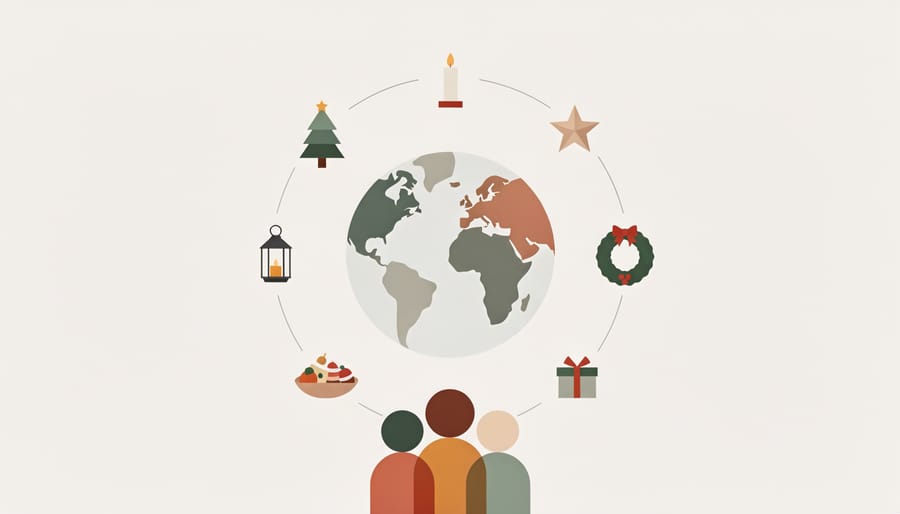
As we journey through these 75 beautiful Christmas traditions from every corner of our world, a heartwarming truth emerges like the first star on Christmas Eve: despite our different languages, customs, and climates, the spirit of Christmas unites us all in a tapestry woven with threads of love, hope, and togetherness.
From the flickering candles in Swedish windows welcoming weary travelers to the joyful parades dancing through Caribbean streets, from families gathering around kotatsu tables in Japan to children leaving shoes by the fireplace in the Netherlands, each tradition tells a story of human connection. These customs, passed down through generations like precious heirlooms, remind us that Christmas magic isn’t found in perfection or grandeur, but in the moments we share with those we hold dear.
What makes this season truly extraordinary is how it inspires us to create our own meaningful traditions. Perhaps you’ll borrow the Danish concept of hygge to create cozy moments with loved ones, or adopt the Filipino tradition of lighting parols to brighten your neighborhood. Maybe you’ll start something entirely new, a custom that reflects your family’s unique story and values.
As you celebrate this Christmas, remember that you’re part of a global family embracing the season’s wonder. Whether your traditions are centuries old or just beginning tonight, they matter because they’re wrapped in love and sprinkled with the hope that tomorrow will be even brighter than today.