
The first holiday season after loss arrives like an uninvited guest, transforming beloved traditions into painful reminders of absence. The twinkling lights that once brought joy now illuminate the empty chair at the table. The familiar carols carry lyrics that suddenly cut deep. Your grief during the holidays is not a problem to solve but a testament to love that continues beyond goodbye.
You don’t need to pretend everything is merry and bright. Permission to feel sad, angry, or overwhelmed during what others call “the most wonderful time of year” isn’t just acceptable—it’s necessary. Some moments you’ll laugh at cherished memories; others you’ll need to step away from the celebration entirely. Both responses honor your journey.
Creating new rituals alongside treasured traditions offers a path forward without abandoning what matters. Light a candle in your loved one’s memory before the holiday meal begins. Hang a special ornament that represents them on the tree. Share stories that keep their presence woven into the fabric of your gathering. These acts don’t erase the pain, but they transform raw grief into purposeful remembrance.
The pressure to maintain normalcy for others—especially children—can feel overwhelming, yet authentic emotion teaches powerful lessons about love’s endurance. Sharing age-appropriate feelings demonstrates that grief and gratitude can coexist, that we honor those we’ve lost by continuing to live fully even as we miss them deeply.
This season will look different. It should. The goal isn’t returning to how things were, but gently discovering how they can be now, carrying both sorrow and hope as you navigate the path ahead.
Understanding Grief During the Holiday Season
Why Empty Chairs Feel Heavier Around the Christmas Table
The scent of cinnamon and pine needles has a way of unlocking memories we didn’t know our hearts were still holding. One whiff of gingerbread cooling on the counter, one familiar carol drifting through the grocery store, and suddenly we’re transported back to Christmases when the table was fuller, the laughter louder, and someone irreplaceable sat in a chair that now stands painfully vacant.
These sensory triggers arrive without warning during the holiday season. The jingle of sleigh bells on a favorite ornament might conjure the exact timbre of a grandmother’s laugh. The sight of twinkling lights strung across the porch could flood you with memories of the person who insisted on climbing that ladder every December, untangling strand after stubborn strand. Even the taste of a particular cookie recipe becomes bittersweet when the hands that once shaped that dough will never do so again.
The empty chair at the Christmas table feels heavier than any presence because it represents not just absence, but the weight of all the future moments this person will miss. The stockings hung by the chimney seem to mock us when one belongs to someone who won’t be there Christmas morning. Holiday traditions that once brought pure joy now arrive wrapped in complex emotions, beautiful and heartbreaking all at once.
This isn’t weakness. This is love refusing to forget, memories insisting on being honored, and grief reminding us that the depth of our sorrow reflects the magnitude of what we’ve lost.
The Loneliness That Comes With Everyone Else’s Joy
There’s a particular ache that settles in when everywhere you turn, twinkling lights reflect joy you cannot feel. The holiday season wraps the world in celebration, yet grief creates an invisible wall between you and the merriment surrounding you. You sit at gatherings watching loved ones laugh over eggnog and exchange gifts, and you feel like you’re observing from behind glass, separated from a happiness that once felt so natural.
The cheerful carols playing in every store, the enthusiastic greetings of “Happy Holidays!” from well-meaning friends, the expectations to smile through family photos—all of it can magnify the emptiness inside. During what everyone proclaims as the most wonderful time of the year, your heart carries a weight no one else can see. You might find yourself nodding along to conversations about holiday plans while your mind drifts to who’s missing from your table this year.
This isolation isn’t just about being alone; it’s about feeling alone in a crowd of celebration. There’s pressure, both external and internal, to hide your pain, to not dampen others’ spirits with your sorrow. You might catch yourself forcing smiles, deflecting concerned questions with “I’m fine,” when you’re anything but fine. The gap between the joy you’re expected to display and the grief you’re actually experiencing can feel impossibly wide, leaving you exhausted from pretending and even more isolated in your authentic feelings.
Creating Your Own Grief Holiday Traditions

Memory Ornaments and Remembrance Rituals
Creating tangible remembrances transforms invisible grief into something you can hold, see, and share with those you love. Memory ornaments become precious keepsakes that give your loved one a special place on your tree, year after year, creating a beautiful bridge between past and present.
Consider crafting photo ornaments using cherished pictures, or fill clear glass baubles with meaningful mementos like ticket stubs from favorite outings, handwritten recipe cards, or pressed flowers from their garden. Some families commission custom ornaments engraved with names, dates, or special messages that capture their loved one’s spirit. One particularly touching tradition involves purchasing a new ornament each year that represents something your loved one cherished, building a collection of memories that grows alongside your family.
Memorial candles offer another gentle ritual. Light a special candle during holiday meals or quiet evening moments, inviting family members to share a favorite memory or simply sit together in the warm glow. Some families designate Christmas Eve as their remembrance time, creating a sacred space before the bustling celebrations begin.
For children, age-appropriate involvement matters deeply. Young ones might decorate simple ornaments with drawings or help choose flowers for a memory vase. Older children can write letters to their loved one, tuck them into ornament boxes, or help create a memory garland strung with photos and paper hearts. These rituals teach children that love doesn’t end, it simply changes form, and that remembering together strengthens family bonds even through loss.
Adapting Traditions Without Losing Connection
Traditions carry the warmth of cherished memories, yet sometimes they need gentle reshaping to fit our changed hearts. There’s profound courage in deciding which beloved rituals still bring comfort and which ones might need to rest for a season—or forever.
Perhaps the family cookie-baking marathon feels overwhelming this year. Consider making just one special batch in your loved one’s favorite flavor, or invite a trusted friend to help shoulder the sweetness and the sorrow. Maybe decorating the towering tree you once adorned together feels impossible; a smaller tabletop version adorned with meaningful ornaments might honor the past without drowning in it.
You hold the permission slip to skip the activities that feel too heavy. The annual holiday party, the elaborate dinner preparations, the marathon shopping trips—none of these require your attendance if they’ll fracture rather than heal. Instead, create space for entirely new traditions that acknowledge your present reality. Light a candle during dinner to represent your loved one’s enduring presence. Take a quiet morning walk to watch the sunrise. Write letters to heaven and tuck them among the tree branches.
Remember, adapting doesn’t mean forgetting. It means loving yourself enough to honor both yesterday’s joy and today’s truth, wrapping them together like the most precious gift.
Acts of Kindness in Their Memory
There’s something beautifully healing about channeling grief into goodness. When we carry forward our loved one’s spirit through acts of kindness, we transform sorrow into light that touches others. Consider creating a tradition that would make them smile: perhaps delivering warm meals to elderly neighbors if they loved cooking, or donating toys in their name if they cherished children’s laughter. Many families find comfort in establishing memorial scholarships or contributing to causes their loved one championed. Random acts of kindness scattered throughout December, like paying for a stranger’s coffee or leaving encouraging notes, become tiny tributes that ripple outward. Volunteer together as a family at food banks or shelters, sharing stories about your loved one while serving others. These gestures don’t erase the absence, but they weave meaning into the emptiness. You might start a giving jar where family members add money throughout the season, then decide together where to donate it on a significant date. Each act becomes a love letter to their memory, proof that their influence continues blessing the world long after they’ve gone.
Practical Support for Your Mental Wellbeing
Setting Boundaries That Protect Your Heart
This season, you hold the gentle power to protect your tender heart. Saying no isn’t selfish—it’s an act of self-compassion that honors where you are in your journey. You might choose to skip the annual cookie exchange, arrive late to the family gathering, or leave when the memories feel too heavy. Each choice is valid, each boundary sacred.
When well-meaning loved ones extend invitations, try these heartfelt responses: “I’m taking things day by day this year. I’ll let you know closer to the date.” Or perhaps, “I’m spending quiet time remembering Mom this season, but I appreciate you thinking of me.” You might also say, “I’m only committing to small gatherings right now, but thank you for understanding.”
Remember that those who truly care will respect your needs without requiring lengthy explanations. If someone pushes, a simple “This is what feels right for me now” stands complete on its own.
Give yourself permission to change your mind, too. You may wake Christmas morning feeling unexpectedly ready to join the celebration, or discover mid-party that solitude calls. Both responses deserve honor. Your grief doesn’t follow anyone’s timeline but your own, and this season, protecting your heart comes first.
Finding Your Support Circle
You don’t have to walk this winding path alone, dear friend. While grief can feel like the loneliest journey, there’s profound comfort in discovering your circle of understanding hearts. Grief support groups offer sacred spaces where tears and laughter mingle freely, where others truly understand the weight of an empty chair at the holiday table. Organizations like The Compassionate Friends, GriefShare, and local hospice programs provide gentle guidance through these tender seasons.
Online communities have become modern-day hearths where bereaved souls gather across distances, sharing stories and strength at midnight when sorrow feels heaviest. Consider exploring forums like What’s Your Grief or connecting through social media grief support groups that honor your specific loss.
Professional counseling offers another layer of support, helping untangle the complex emotions that holidays can illuminate. Many therapists specialize in grief work and understand the particular ache of festive seasons.
Remember, reaching out isn’t weakness—it’s the bravest kind of strength. Like lighting one candle from another, connecting with fellow travelers doesn’t diminish your own light; it creates a constellation of hope that guides everyone home through the darkest nights.
Self-Care Practices for Heavy Hearts
When your heart feels heavy as snowfall, gentle self-care becomes your warmest blanket. Pour your feelings onto journal pages like hot cocoa into a favorite mug—there’s healing magic in seeing your thoughts transformed into words. Let nature’s winter wonderland comfort you with mindful walks where crisp air clears clouded emotions and barren trees remind you that dormant seasons eventually bloom again.
Give yourself permission to step away from the glow of social media when endless happy holiday posts feel overwhelming. Your grief journey doesn’t need an audience. Protect your rest by maintaining familiar sleep routines, even when the season feels topsy-turvy—your body and spirit need this anchor of consistency.
Remember, tears aren’t holiday party crashers; they’re honored guests carrying memories of love. When they arrive unexpectedly while decorating cookies or hearing a certain carol, welcome them. Each tear waters the garden of remembrance where your loved one’s spirit continues blooming. Be tender with yourself during this bittersweet season, knowing that caring for your grieving heart is the most precious gift you can unwrap.

Meaningful Ways to Include Loved Ones in Your Celebration
Storytelling and Recipe Traditions
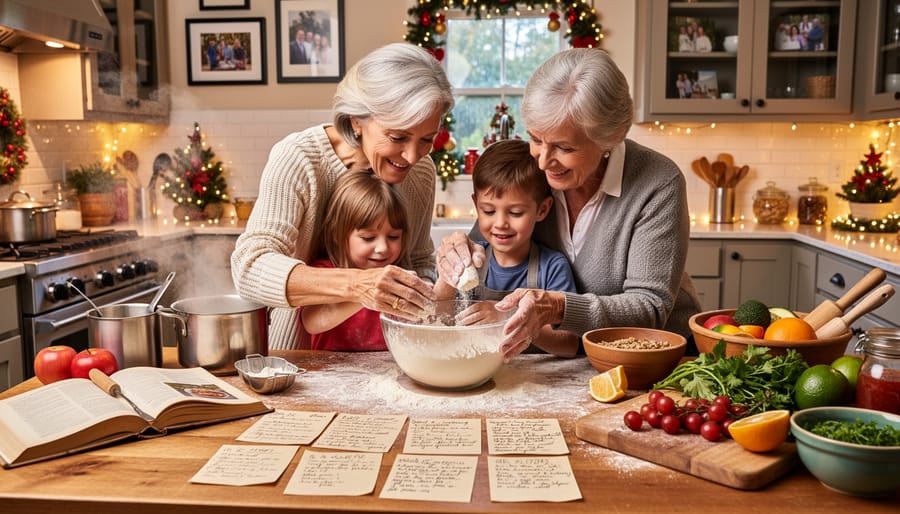
There’s something profoundly comforting about rolling out pie dough the way your grandmother did, or stirring a pot of stew that fills the kitchen with the same aroma that once meant home. When you prepare their favorite recipes during the holidays, you’re not just cooking—you’re keeping their essence alive, one familiar flavor at a time. The act of measuring, mixing, and tasting becomes a tender conversation with memory, a delicious way to feel close to someone whose absence the season makes especially acute.
Gather loved ones around the table to share stories that keep your person’s spirit present. Maybe it’s recounting the year Aunt Marie accidentally used salt instead of sugar in the cookies, or how Dad always insisted on carving the turkey in that particular way. These stories, told and retold, become treasured heirlooms themselves, passed down through generations alongside the recipes.
Consider creating a memory jar as a beautiful tradition that invites participation. Set out a decorative container with slips of paper and pens, inviting family members to write down their favorite remembrances, funny moments, or things they miss most. Read these aloud together on a special evening, transforming grief into gratitude and loneliness into connection. This collection becomes a growing testament to a life well-loved and deeply missed.
Symbolic Gestures That Speak Without Words
Sometimes the most powerful tributes shimmer quietly among the tinsel and lights, speaking volumes without saying a word. Setting an empty place at the holiday table transforms absence into presence, creating a sacred space that acknowledges your loved one still holds a seat in your heart and at your gathering. The chair needn’t remain unfilled throughout the meal—some families place a candle there, or a framed photograph surrounded by their favorite flowers.
Hanging a special stocking in their honor becomes a vessel for memories rather than gifts. Family members might tuck written notes inside throughout the season, sharing moments when they felt their loved one’s presence or simply saying the things left unsaid. Some fill these stockings with donations made in their name, turning grief into generosity.
Weaving their favorite colors through your decorations creates a beautiful thread of remembrance. Perhaps they adored deep purple—let velvet ribbons cascade through your garland. Did they cherish sunflowers? Tuck golden blooms among the evergreen boughs. These visual whispers of love catch the light and your eye, offering gentle reminders that their spirit continues to brighten your celebrations, even in their physical absence. These gestures don’t erase the ache, but they tenderly honor the love that remains.
When Grief Changes How You Celebrate
Some years, grief rewrites the entire holiday story, and that’s perfectly okay. The celebrations that once filled your heart with joy may now feel impossible to recreate, and you have complete permission to change everything about how you observe this season.
Perhaps this is the year you trade hosting duties for a quiet getaway, exchanging the family table for unfamiliar landscapes where memories don’t lurk in every corner. Maybe you’ll discover that booking a cozy cabin in the mountains or exploring a new city brings unexpected comfort, allowing you to step away from traditions that feel too heavy to carry right now.
Simplifying can be its own gift. The elaborate feast might become takeout shared with a few understanding friends. The towering tree adorned with decades of ornaments could transform into a simple wreath on the door. Those marathon baking sessions? They can wait for a gentler year. There’s profound wisdom in recognizing what you can and cannot do.
Some families choose to skip certain celebrations entirely, and this decision deserves respect rather than judgment. If attending the neighborhood cookie exchange feels unbearable, staying home wrapped in a soft blanket with a favorite movie honors your grief just as validly as any tradition.
Remember, there is no rulebook for grieving during the holidays. Your loved one would want you to navigate this season in whatever way brings you peace, whether that means embracing change completely or holding onto just one meaningful ritual. Listen to your heart, adjust as needed, and trust that your way is the right way.
As you walk through this season carrying both memory and hope, remember there’s no single right way to grieve during the holidays. Your journey is as unique as the love you shared, and it will look different from year to year, perhaps even from moment to moment. That’s not only okay—it’s exactly as it should be.
The twinkling lights can still hold wonder even when tears blur your vision. The scent of pine and cinnamon can bring comfort alongside aching remembrance. You can laugh at a cherished memory and cry in the same breath. The magic of the season doesn’t disappear because of loss; it simply transforms, becoming something more tender, more precious, more deeply felt.
Your loved one remains woven into the fabric of your celebrations—in the recipes you still make, the ornaments that hold stories, the traditions that carry forward, and the quiet moments when you feel their presence in the flickering candlelight. They live on in how you love, how you remember, and how you slowly, gently find your way through.
Be patient with yourself. Honor what you’re feeling. Embrace the small moments of light when they come. Some days will be harder than others, and that’s part of the journey. You’re not alone in this tender navigation between grief and celebration. Your heart has room for both sorrow and joy, and in holding space for both, you create something beautifully, authentically yours—a season that honors the past while gently opening toward hope.