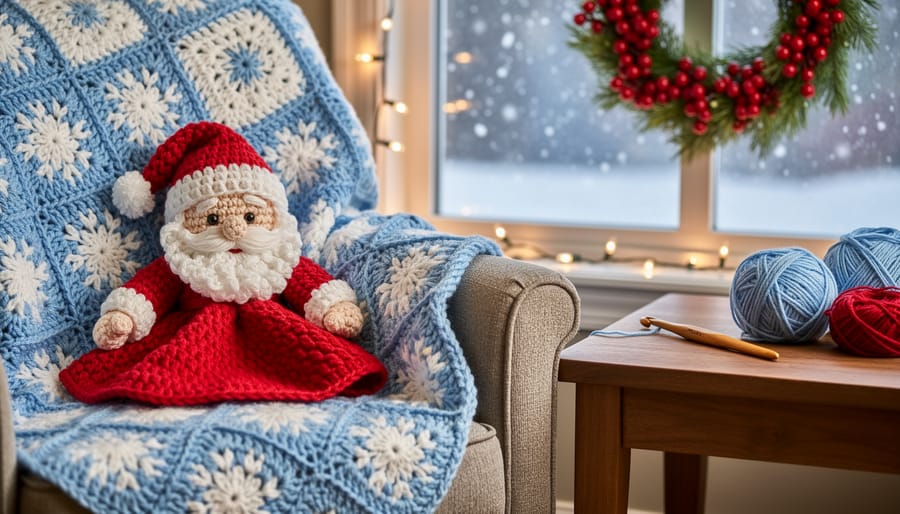
Christmas crochet patterns transform simple yarn and a hook into beloved holiday traditions, and this season you have access to 25 free designs spanning festive decorations, cozy throws, and delightful handmade gifts. Whether you’re stitching a quilted classic Christmas blanket to drape over the sofa on Christmas morning or crafting a 26-inch plush Santa snuggler for the little ones, these patterns guide crocheters through every step with clear instructions and photo tutorials designed for all skill levels.
The rhythm of the crochet hook carries a particular magic during the holiday season. There’s something deeply satisfying about working chain stitches and double crochets while snow falls outside, knowing that each row brings you closer to a handmade treasure. Your grandmother might have crocheted doilies for the Christmas table, and perhaps your own hands now carry forward that legacy with berry-cute wreaths and chunky yarn elves that will become tomorrow’s heirlooms.
This year’s patterns range from quick afternoon projects to ambitious pieces you’ll want to start now for the holidays ahead. Picture a dusty snowflake throw cascading across an armchair, or an 18-inch plush Christmas tree tucked into a child’s arms on Christmas Eve. Many designs call for super bulky weight yarns that work up quickly, perfect for those moments when you realize you need one more gift or want to refresh your holiday décor without the rush and expense of store-bought alternatives.
The beauty of crochet lies in its forgiving nature and the way it invites you to slow down, stitch by stitch, creating warmth and wonder with your own two hands.
What You’ll Need to Start Crocheting Christmas Patterns
Your workspace needs just a handful of supplies to bring Christmas crochet patterns to life. The beauty of these projects lies in how simple tools transform yarn into treasured decorations and gifts that’ll grace your home for years to come.
Start with the right yarn for your chosen pattern. Many designers creating plush holiday characters and quick-finish decorations specifically recommend super bulky weight yarns from Premier Yarns and Michaels, which work up fast and create satisfyingly chunky textures perfect for cozy throws and huggable stuffed figures. For delicate ornaments and intricate snowflake designs, you’ll want lighter weights that hold their shape. Red, green, white, and gold form the classic Christmas palette, but don’t shy away from metallic threads that catch the light or soft pastels for a vintage feel.
Your essential supply list includes:
- Yarn in weights appropriate to your pattern (super bulky for amigurumi, lighter weights for ornaments)
- Crochet hooks sized to match your yarn weight (typically J through N for bulky projects)
- Sharp fabric scissors for clean cuts
- Yarn needles with large eyes for weaving in ends and seaming
- Stitch markers to track rounds in amigurumi
- Polyester fiberfill stuffing for three-dimensional characters and ornaments
- Tapestry needles and embroidery floss for adding faces and details
Hook size matters more than you might think. A larger hook with bulky yarn creates an airy, drapey fabric ideal for blankets and scarves. A smaller hook worked tightly keeps stuffing hidden inside amigurumi figures and maintains ornament structure. Most patterns specify the hook size tested by the designer, giving you a reliable starting point.
For finishing touches, gather basic sewing supplies, safety eyes for stuffed animals (if making gifts for older children or adults), ribbons for hanging ornaments, and small bells or buttons that add personality. These embellishments transform a simple crocheted shape into something that feels unmistakably festive and uniquely yours.
Before You Begin: Safety and Setup Tips
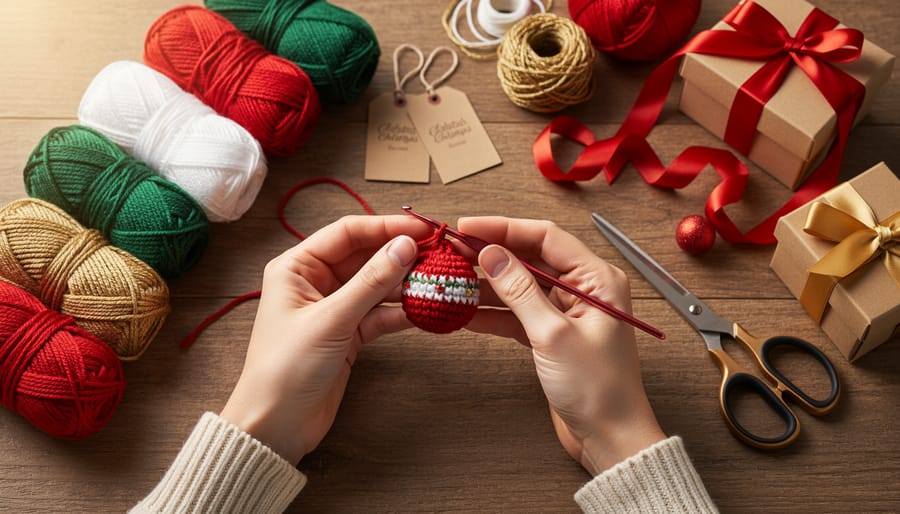
Setting yourself up for success before you cast on your first stitch will make your Christmas crochet journey safer and more enjoyable. Taking a few minutes to arrange your workspace and gather the right tools prevents frustration and physical strain during those cozy marathon crafting sessions.
Start by choosing a spot with excellent lighting, natural daylight is ideal, but a bright lamp positioned over your left shoulder (or right if you’re left-handed) eliminates shadows and reduces eye fatigue. Your chair should support your lower back, and keep your project at a comfortable height so you’re not hunching forward. Rest your elbows lightly on armrests or a pillow in your lap to reduce shoulder tension.
Hold your hook with a relaxed grip, as if you’re holding a pencil rather than gripping a hammer. Tension should come from your yarn hand, not a death grip on the hook. Your wrists should stay in a neutral position, not bent sharply up or down.
If you’re creating gifts for young children, choose washable yarns without small embellishments that could become choking hazards. Skip buttons, beads, and safety eyes for toys meant for babies and toddlers. When working with sharp tools like yarn needles and scissors, store scissors safely in a closed case when not in use, especially in homes with curious little ones.
Keep your workspace organized with small containers for stitch markers, yarn scraps, and finished pieces. A simple basket beside your chair holds current projects and prevents tangled yarn from rolling under furniture. This setup lets you focus on the meditative rhythm of creating rather than hunting for misplaced supplies.
25 Free Christmas Crochet Patterns to Try This Season
Cozy Christmas Blankets and Throws
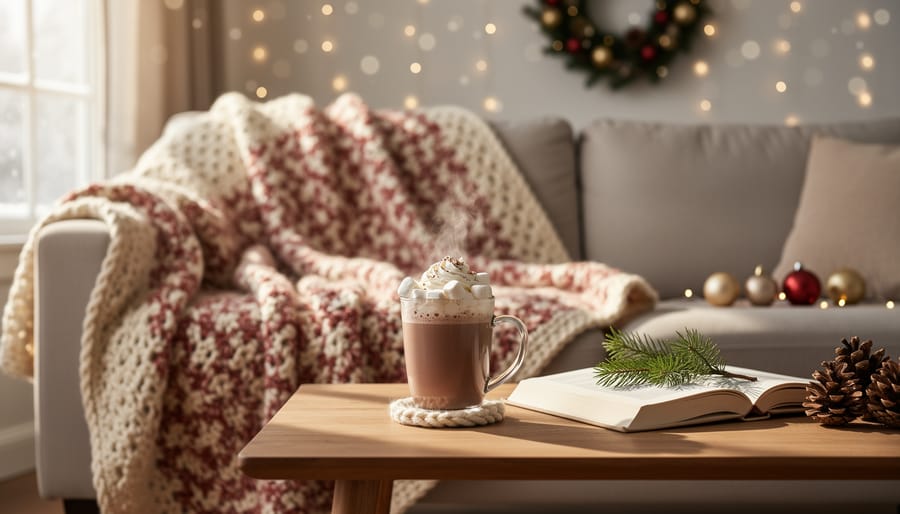
Nothing captures the essence of a cozy Christmas quite like a handmade blanket draped across your lap while you watch snow fall outside your window. These festive throws transform your living space into a winter wonderland, and they’re surprisingly achievable even for intermediate crocheters.
The Crochet Dusty Snowflake Throw brings delicate winter magic to life with its intricate snowflake motifs worked in soft, pale colors. Each snowflake connects to create a stunning overall pattern that looks complex but follows a rhythmic repetition once you establish the first few motifs. This throw works beautifully as a statement piece across the back of a sofa or as a treasured gift for someone special.
For those who love traditional holiday colors, the Crochet Quilted Classic Christmas Blanket delivers rich reds and greens in a quilted-inspired design. The raised texture adds visual depth and extra warmth, making it perfect for those cold December evenings when you need something substantial to wrap around your shoulders. The geometric pattern creates a timeless look that complements both modern and traditional holiday decor.
Both patterns are available free from Yarnspirations, complete with detailed instructions and yarn recommendations. They require commitment, expect several weeks of evening work, but the result becomes a family heirloom that returns year after year.
Festive Wreaths and Wall Hangings
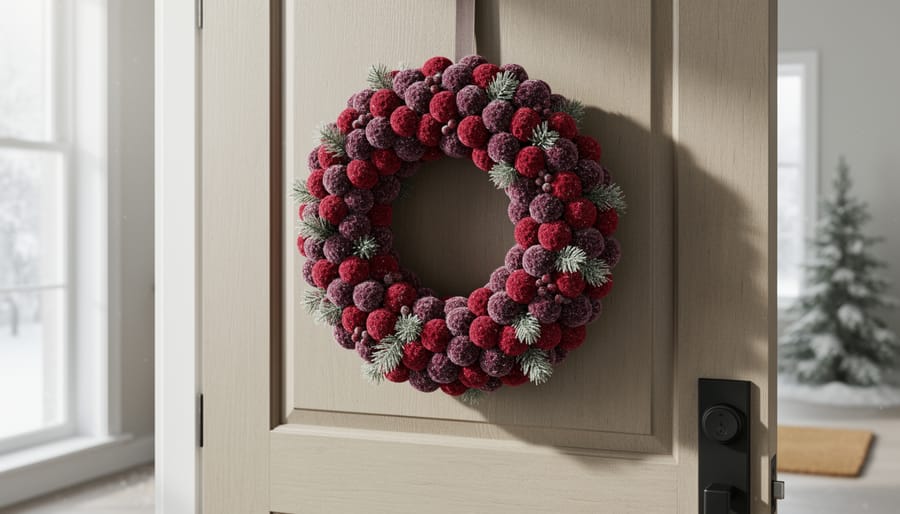
Wreaths hold a special place in holiday tradition, welcoming guests with handmade warmth the moment they reach your door. The Crochet Berry Cute Wreath from Yarnspirations captures that inviting spirit with its cheerful berry accents and textured greenery, creating a piece that feels both classic and personal. Unlike mass-produced decorations, a crocheted wreath carries the quiet pride of something made by your own hands, each stitch a small act of holiday preparation.
Wall hangings extend that festive charm beyond the front door. A garland draped above a mantel, a dimensional snowflake mounted near the tree, or a textured banner spelling out seasonal greetings transforms bare walls into celebrations of the season. These pieces work especially well in apartments or homes where space for a full tree might be limited, bringing Christmas magic to every room.
The beauty of crocheted wall decor lies in its longevity. While fresh wreaths wilt and disposable decorations end up in landfills, your handmade pieces return year after year, accumulating memories with each hanging. Children remember the wreath that greeted them every December, and decades later, those same decorations become touchstones connecting generations. Exploring different Christmas wreath ideas can inspire you to create variations that evolve with your family’s changing tastes while maintaining that treasured handmade quality that makes each piece irreplaceable.
Adorable Christmas Character Amigurumi
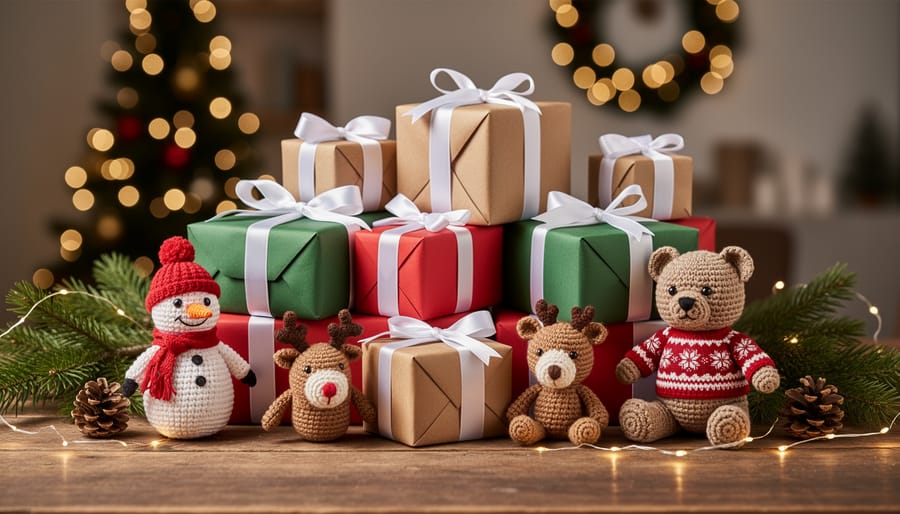
Nothing captures the spirit of Christmas quite like a hand-stitched character that radiates personality from every stitch. These amigurumi patterns transform yarn into huggable companions that children will treasure long after the decorations come down, making them ideal gifts for little ones or charming display pieces that anchor your holiday mantel.
The Floppy 26″ Santa Snuggler Pattern creates an oversized plush friend with soft, floppy arms perfect for bedtime cuddles. At over two feet tall, this generous Santa becomes a statement piece that kids can actually wrap their arms around. The 18″ Plush Christmas Tree Pattern offers similar appeal with its substantial size and three-dimensional branches that beg to be squeezed. Both patterns work beautifully with super bulky weight yarns from Premier Yarns and Michaels, which give these characters their irresistibly squishy texture while working up faster than traditional amigurumi weights.
The Chunky Yarn Elf Pattern brings whimsy with pointed hat and cheerful expression, while the Winter Penguin Pattern charms with its tuxedo coloring and waddling stance. These smaller characters make excellent stocking stuffers or gift toppers that become the gift themselves. Each pattern includes step-by-step instructions and photo tutorials designed for crocheters of all levels, walking you through shaping techniques that bring these faces to life. The real magic happens when you watch someone’s eyes light up at receiving something made by your hands, something no store-bought toy can replicate.
Ornaments and Tree Decorations
Tree ornaments are where many crocheters discover their love for the craft, they work up quickly, require minimal yarn, and deliver instant festive satisfaction. A small snowflake might take just thirty minutes, while a miniature stocking or candy cane can be finished during a cozy evening. These bite-sized projects let you experiment with new stitches without committing to weeks of work, making them ideal for beginners who want to build confidence through successful completions.
Beyond their practical appeal, handmade ornaments carry profound sentimental weight. Each year as you unwrap decorations, those crocheted pieces trigger memories of the winter you made them, perhaps while watching holiday films or sitting by the fireplace with family. Many households treasure collections spanning decades, where a slightly wonky first attempt hangs proudly beside more polished recent creations. Children especially delight in ornaments made just for them, personalized with their favorite colors or characters.
If you’re decorating a larger tree and wondering how many pieces you’ll need, an ornament quantity calculator helps you plan your crafting timeline. Garlands offer another approachable option, crocheting a long chain of simple shapes like stars or circles creates dramatic visual impact with repetitive, meditative stitching. String them across mantels, wrap them around banisters, or drape them through tree branches for handmade charm that transforms your entire home into a testament to your creative dedication.
Wearable Christmas Cheer
Nothing wraps you in holiday spirit quite like wearing your festive cheer. Crocheted scarves, hats, mittens, and headbands let you carry Christmas warmth wherever you go, while stockings hung by the chimney become treasured family traditions when crafted by hand.
Festive wearables make especially thoughtful personalized gifts. A chunky scarf in someone’s favorite winter colors shows you know their style. Baby’s first Christmas hat becomes a keepsake photo prop that parents treasure for years. Matching mittens for siblings create sweet holiday card moments while keeping little hands warm during snowball fights.
These accessories also work beautifully as handmade stocking stuffers when sized smaller. A crocheted snowflake brooch, festive hair scrunchie, or miniature ornament earring holder fits perfectly in stockings while demonstrating the care you put into giving.
The beauty of wearable patterns is their practical magic. Unlike decorations stored eleven months yearly, a well-made scarf gets worn all winter long. Each time your loved one wraps it around their neck, they’ll remember the hands that made it and the Christmas when it appeared under the tree.
Gift Toppers and Packaging
The presentation of a gift speaks volumes before the ribbon is even untied. Crocheted bows, wine bottle cozies, and drawstring gift bags transform ordinary packages into conversation starters that recipients often treasure as much as the gift itself. A hand-stitched bow in festive red or ivory can perch atop a box year after year, becoming part of your family’s wrapping tradition alongside upcycled gift wrap and recycled ribbons.
Small projects like gift card holders shaped like mittens or stockings work up in under an hour, making them perfect for last-minute additions that show you went the extra mile. Consider crocheting reusable gift bags in holiday colors with decorative snowflake appliqués, the recipient gets two gifts, and you reduce waste. Patterns for bottle toppers that resemble Santa hats or tiny Christmas trees add whimsy to hostess gifts. These finishing touches cost pennies in yarn yet communicate something priceless: that you carved out time during the busiest season to create something with your own hands, just for them.
How to Follow Christmas Crochet Patterns: Step-by-Step Process
Reading and Understanding Pattern Instructions
Before you cast on your first stitch, spend time studying the entire pattern from start to finish. Christmas crochet patterns use standardized abbreviations that might look cryptic at first, sc for single crochet, dc for double crochet, ch for chain, but these shortcuts become second nature quickly. Most patterns include an abbreviation key at the beginning, so keep it handy as you work.
Pay close attention to stitch counts enclosed in parentheses or brackets. When a pattern reads “2 dc in next st” five times, you’re creating increases that shape your project. Asterisks mark sections you’ll repeat, which is crucial for maintaining pattern symmetry in decorative pieces like wreaths or snowflakes.
Pattern structure matters enormously. The materials list tells you exactly what you need, while gauge information ensures your finished piece matches the intended size. Christmas patterns with step-by-step photo tutorials (like those designed for all skill levels) pair visual guides with written instructions, giving you two ways to confirm you’re on track.
Read through completely before starting. This reveals how sections connect, where color changes occur, and what finishing techniques you’ll need. You’ll spot potential confusion points while you still have time to clarify them, rather than discovering halfway through that you misunderstood a critical instruction.
Using Photo Tutorials and Visual Guides
Photo tutorials transform potentially confusing written instructions into clear, follow-along guides. When you encounter a new stitch or shaping technique, look at the photo first to see what the finished result should look like, then read the written instruction to understand the mechanics. This dual approach works especially well for visual learners who struggle with crochet abbreviations.
Reference photos most heavily during tricky sections: color changes, decreases for amigurumi shaping, or assembly steps where multiple pieces come together. The step-by-step photo tutorials included in patterns designed for all skill levels break down complex moves into manageable stages, showing your hook placement and yarn position at each step.
Use written instructions as your primary roadmap and photos as your checkpoint system. After completing a few rows or rounds, compare your work to the corresponding tutorial image. If something looks off, the photo reveals where you veered from the pattern. This catching-early approach saves hours of frogging later.
For assembly-heavy projects like the plush Christmas characters, lay out printed photos alongside your pieces. You’ll see exactly how ears attach to heads or how limbs position on bodies before you commit needle to yarn, ensuring your finished creation matches the designer’s vision.
Finishing Techniques for Professional Results
The difference between a handmade piece that looks store-bought and one that screams “craft project” often comes down to those final finishing touches. Start by weaving in your yarn ends securely, thread them through a tapestry needle and work them back through several stitches on the wrong side of your work, changing direction at least once to prevent unraveling. Trim closely but not flush against the fabric. For amigurumi Santas and penguins, this step matters even more since these pieces get handled and hugged.
Blocking transforms your work by evening out stitches and setting the shape. Pin your finished blanket or wreath to blocking mats, mist lightly with water, and let it dry completely. This simple step makes the Dusty Snowflake Throw pattern’s intricate details pop and gives your Berry Cute Wreath crisp, professional edges.
When stuffing character amigurumi like the 26-inch Santa Snuggler, work in small amounts of polyester fiberfill, pushing it into extremities first with a chopstick or crochet hook handle. Firm stuffing prevents sagging but overstuffing distorts stitches, aim for a squeezable feel. Shape as you go, checking that heads stay round and bodies maintain their intended proportions.
Embellishments add personality. Securely stitch buttons, felt details, or ribbon bows rather than gluing them, especially for pieces destined for children. A well-placed French knot for eyes or a satin ribbon bow on a gift topper elevates the entire project. Take your time here, rushing these final moments wastes all the hours you invested in getting this far.
Checking Your Work and Troubleshooting Common Issues
Before you snip the final yarn tail, take a few minutes to inspect your Christmas creation with fresh eyes. Hold your finished piece at arm’s length and compare it to the pattern photos, does the shape look right, and are the proportions as expected? This distance view often reveals issues you might miss when working up close. Check that all stuffing is distributed evenly in amigurumi pieces, with no lumpy spots or thin areas that could flatten over time. Count your stitches in the final round or row to confirm you haven’t accidentally dropped or added any along the way.
Common mistakes are easier to fix than you might think. If you spot a dropped stitch several rows back, use a crochet hook one size smaller to carefully work it back up through the fabric, securing it into the current row. Tension issues, where some sections look looser or tighter than others, usually stem from fatigue or interruptions; you can sometimes even them out by gently blocking the finished piece with steam or water, depending on your yarn fiber. Miscounts often appear as unexpected increases or decreases that warp the shape; if caught early, you can unravel back to the error and rework those rows rather than starting over.
Your project is complete when all ends are woven in securely, any required seaming is finished, and the piece holds its intended shape without pulling or puckering. If something feels off but you can’t identify the problem, set the project aside for a day and return with fresh perspective, you’ll often spot the issue immediately. Trust your instincts: if a section doesn’t look quite right compared to the pattern images, it probably needs adjustment. The beauty of crochet is that almost anything can be fixed with patience and a willingness to rework a few rows.
Frequently Asked Questions About Christmas Crochet Patterns
The questions you’re wrestling with as you browse patterns are the same ones that come up in every crochet group as the holidays approach. Understanding the practical realities of Christmas crochet helps you plan realistically and start with confidence rather than overwhelm.
Can beginners really use these patterns?
Yes. Many Christmas patterns, especially smaller ornaments and simple scarves, require only basic stitches like chain, single crochet, and double crochet. The pattern bundle mentioned earlier includes step-by-step photo tutorials designed specifically for crocheters of all levels, making them accessible even if you learned to crochet recently.
How long does each project take?
Small ornaments typically take one to three hours, while larger projects like the Crochet Dusty Snowflake Throw might require several evenings over a week or two. Amigurumi characters like the 26-inch Santa Snuggler generally take a weekend, depending on your pace and how much detail work is involved.
What if I can’t find the exact yarn recommended?
You can substitute yarns as long as you match the weight category. If a pattern calls for super bulky weight yarns from Premier Yarns or Michaels, any super bulky yarn will work, though colors and texture may vary slightly from the original design.
Can I sell items made from free patterns?
This depends entirely on the designer’s terms. Most free patterns allow you to sell finished items in small quantities for personal income, but prohibit mass production or commercial manufacturing. Always check the pattern’s copyright notice before selling your work.
Skill level matters less than willingness to learn as you go. If you can chain and work a basic stitch, you can handle most beginner patterns. Intermediate patterns introduce techniques like working in the round or simple increases and decreases, skills you’ll pick up quickly with the photo tutorials included in many modern patterns.
Timing your projects matters more than most crafters expect. A simple ornament makes a perfect evening project, but a full-sized blanket started in mid-December will still be on your hook come Valentine’s Day. Start ambitious pieces in October, save quick wins for those final frantic weeks, and keep one or two small patterns handy for gift emergencies.
The joy of crochet is that you’re never truly stuck. Online communities, video tutorials, and even the pattern designer’s social media often provide answers when instructions feel confusing. Most crocheters remember being beginners themselves and genuinely want to help you succeed with your holiday projects.
Picture yourself on a cold December evening, hook in hand, creating something that will rest on your family’s tree for decades to come. The rhythmic pull of yarn through loops becomes a kind of meditation, a quiet pause in the holiday rush where your hands shape not just decorations, but memories.
Handmade gifts carry weight that store-bought items rarely match. Across world Christmas traditions the act of crafting something by hand speaks a language older than wrapping paper and shipping labels. It says: I spent time on you. I thought of you while my fingers worked. This matters.
You don’t need to tackle all 25 patterns at once. Choose one simple ornament or a cozy throw blanket. Feel the yarn soften in your hands as tension becomes rhythm. Let mistakes teach rather than frustrate.
This Christmas, give yourself permission to slow down and create. The treasures you make this season won’t just decorate your home, they’ll become the heirlooms your grandchildren point to someday, asking about the hands that made them. Start tonight. Your hook is waiting.