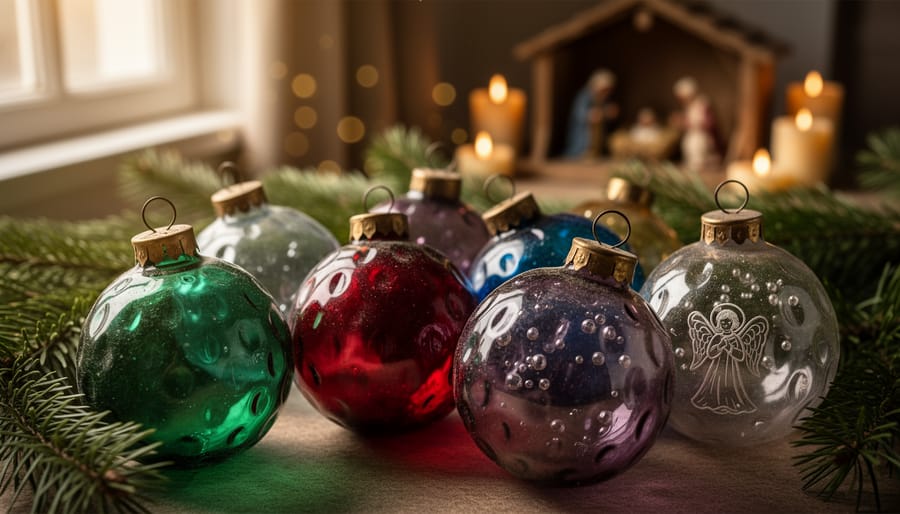
Examine the delicate glass surface for tiny air bubbles and slight irregularities that reveal hand-blown craftsmanship from mid-century Italian artisans. Authentic vintage pieces from the 1940s-1960s display a beautiful asymmetry and warmth that modern mass-produced ornaments simply cannot replicate, with each swirl of color and indent telling the story of skilled hands working molten glass in family workshops nestled in Italian villages.
Turn ornaments upside down to inspect metal caps for oxidation patterns and wear consistent with age, noting that genuine vintage Italian pieces often feature brass or tin caps that have developed a soft patina over decades of being carefully unwrapped each December. The hanging mechanisms should show thoughtful construction rather than industrial uniformity.
Search for distinctive design elements rooted in Italian Christmas traditions, including religious imagery like elaborate nativity figures, angels with spun glass wings, ornate churches, and whimsical representations of Father Christmas riding donkeys rather than reindeer. Italian ornament makers drew inspiration from their rich Catholic heritage and regional folklore, creating pieces that capture the warmth of family gatherings around the presepio.
Look for the soft glow of silver nitrate interiors that give vintage ornaments their characteristic luminous quality, often appearing more muted and silvery-gray compared to the bright aluminum coating in contemporary versions. This silvering naturally degrades over time, creating beautiful ghostly patches and adding to each ornament’s unique character and authenticated age, transforming imperfections into treasured markers of Christmas memories passed down through generations.
The Artisan Legacy Behind Italian Christmas Ornaments
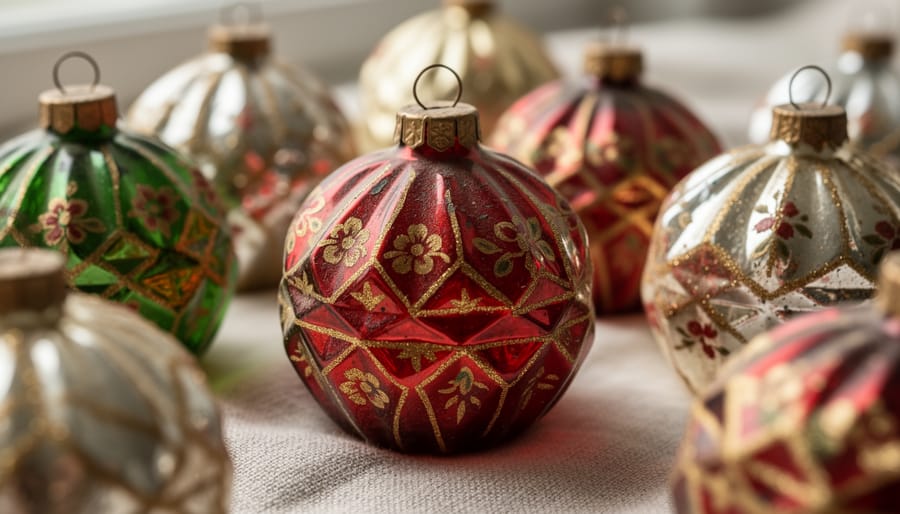
The Golden Age of Italian Glass Ornament Making
Between the 1920s and 1960s, the small towns and villages nestled around Venice became the glittering heart of Christmas magic. This was when Italian glass ornament making reached its most enchanted heights, a time when skilled artisans transformed humble materials into treasures that would grace family trees for generations to come.
In workshops filled with the warm glow of furnaces and the delicate tinkling of glass, master craftsmen worked their alchemy. These weren’t factory workers punching a clock—they were artists who had learned their trade through years of apprenticeship, often passing secrets from father to son, mother to daughter. Their weathered hands could coax molten glass into impossibly delicate shapes: shimmering baubles no bigger than a walnut, elegant teardrops that caught the light like frozen dewdrops, and whimsical figures that seemed to dance with holiday spirit.
The post-war years brought particular brilliance to this craft. As families across the world rebuilt their lives and homes, Italian ornaments became symbols of hope and renewal. Artisans in Murano and surrounding regions created pieces adorned with intricate wire wrapping, hand-painted details, and the distinctive silvering technique that gave ornaments their magical, mirror-like interiors.
Each piece carried the fingerprint of its maker—a slight asymmetry here, a unique color combination there—transforming these ornaments into something far more precious than mere decorations. They were, and remain, tiny vessels of artistry and human connection.
Traditional Italian Glassblowing Techniques
In the soft glow of Italian workshops nestled in the hills of Lauscha and later perfected in Venice, master artisans transformed molten glass into shimmering Christmas magic using time-honored techniques passed down through generations. Each vintage Italian ornament began its journey as a delicate glass tube, carefully heated over an open flame until it glowed like captured starlight.
The glassblower would then exhale gently through the tube, coaxing the molten glass to expand into translucent spheres, bells, and whimsical shapes. This required the steady hand of an artist and the patience of someone who understood that beauty cannot be rushed. While the glass remained warm and pliable, craftsmen would create indentations using specialized tools, pressing dimples and concave patterns that would later catch and dance with candlelight on Christmas trees.
The silvering process came next, a closely guarded secret that gave these ornaments their characteristic luminous quality. Artisans would coat the interior with a solution of silver nitrate, creating that enchanting mirror-like finish that seems to hold winter’s first frost. Once dried and sealed, talented painters would add delicate details by hand, applying vibrant lacquers in jewel tones of ruby red, sapphire blue, and emerald green.
Each brushstroke told a story, whether depicting tiny villages dusted with snow, cherubic angels with golden halos, or intricate floral patterns that bloomed across the glass surface. These labor-intensive methods ensured that no two ornaments were exactly alike, making every piece a precious keepsake filled with the warmth of human touch and Italian artistry.
Iconic Styles and Designs of Vintage Italian Ornaments
Classic Figural Ornaments
At the heart of every Italian Christmas tree, you’ll discover enchanting figural ornaments that tell the timeless story of the season. These delicate treasures capture the essence of Italian spirituality and festive joy, bringing sacred narratives to life in blown glass and hand-painted ceramic.
Cherubic angels with golden wings and serene expressions have graced Italian homes for generations, their rosy cheeks and peaceful faces reminding families of heavenly guardians watching over the season. These celestial figures often feature intricate details like spun glass halos and flowing robes adorned with glitter that catches the twinkling tree lights.
Italian artisans created magnificent Babbo Natale figures long before modern Santa became ubiquitous, depicting him in flowing robes of deep crimson or traditional bishop’s attire. These vintage Saint Nicholas ornaments reflect the religious roots of the gift-giver tradition, often carrying a staff or blessing gesture.
Nativity characters hold special significance, with miniature versions of Mary, Joseph, baby Jesus, and the Three Wise Men crafted as tree decorations. These sacred figures allowed families to celebrate the Christmas story throughout their homes, extending the reverence of the presepio beyond its traditional display. Sheep, donkeys, and the Star of Bethlehem completed these devotional collections, transforming Christmas trees into shimmering tapestries of faith and wonder.
Fruit, Vegetable, and Nature Motifs
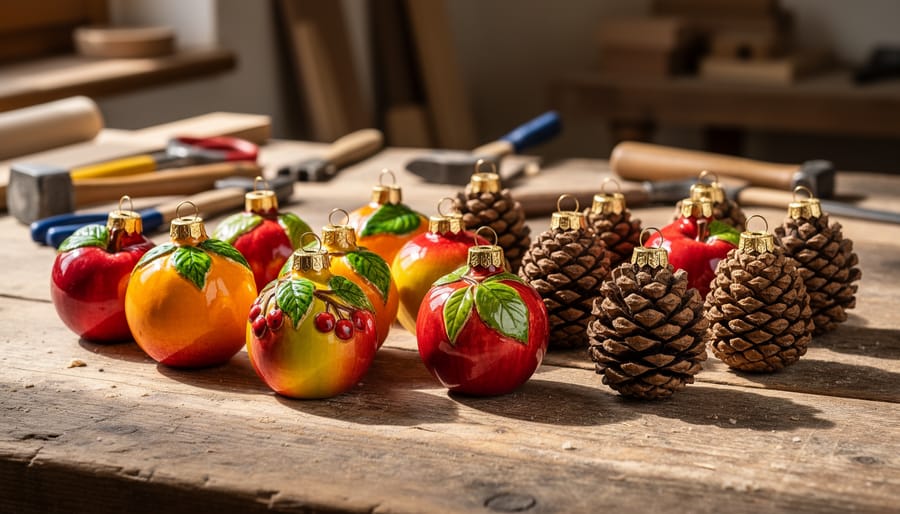
Italian artisans drew endless inspiration from the bountiful harvests of their homeland, transforming simple fruits and natural treasures into glittering Christmas magic. These ornaments tell the story of a culture deeply rooted in the land, where every grape cluster and golden pear symbolized abundance and gratitude.
Shimmering glass grapes in deep purples and ruby reds dangled from branches like jeweled vineyard memories, honoring Italy’s winemaking traditions. Plump glass pears gleamed in soft gold and amber hues, their delicate stems wrapped in tinsel that caught the candlelight just so. These fruit ornaments weren’t merely decorative—they carried prayers for prosperity and fruitful years ahead.
Nature’s woodland gifts found their place too, with acorns and pinecones carefully crafted in silver and bronze finishes, sometimes dusted with mica snow that sparkled like morning frost. Mushrooms, chestnuts, and even tiny walnuts appeared among the branches, each piece celebrating the forests and fields that sustained Italian families through generations.
These natural motifs connected the Christmas tree to Italy’s agricultural soul, transforming holiday decorating into a celebration of the earth’s gifts and the simple beauty found in orchards, vineyards, and woodland paths.
Geometric and Abstract Indented Ornaments
Among the most enchanting treasures from Italy’s ornament-making heritage are the geometric indented glass balls that seem to capture and reflect Christmas light in magical ways. These distinctive spheres feature carefully crafted concave dimples pressed into their surface, creating mesmerizing patterns that dance with shadow and sparkle. Picture deep cobalt blues reminiscent of Mediterranean twilight, ruby reds as rich as Venetian wine, and emerald greens that echo the cypress groves of Tuscany. Each depression catches the glow of tree lights differently, transforming a simple glass ball into a tiny kaleidoscope of color and dimension. Italian artisans perfected this indenting technique in the mid-twentieth century, using specialized molds and hand-finishing to ensure each ornament possessed both geometric precision and artistic soul. When these beloved ornaments hang from fragrant pine branches, their concave patterns create an almost three-dimensional effect, drawing the eye into their depths while simultaneously radiating warmth outward into your holiday home.
La Befana and Uniquely Italian Characters
Among the most enchanting vintage Italian ornaments are those depicting La Befana, the beloved Christmas witch who flies on her broomstick delivering gifts to children on Epiphany Eve. These charming figurines capture her distinctive character with flowing shawls, crooked walking sticks, and a sack brimming with sweets and coal. Collectors treasure these pieces for their storytelling charm and connection to Italian folklore.
Beyond La Befana, vintage ornaments feature other uniquely Italian characters like the Ceppo figures and regional nativity characters such as the zampognari, traditional bagpipers who would journey from mountain villages to play Christmas melodies. These Christmas symbols transport us to cobblestone piazzas and family gatherings where ancient traditions come alive. Hand-painted ceramic and glass versions from the mid-twentieth century showcase wonderful folk art qualities, with rosy cheeks, expressive faces, and traditional Italian costumes. These ornaments invite magical conversations about Italian Christmas customs, making them perfect heirlooms to share across generations.
How Vintage Italian Ornaments Shaped Christmas Traditions
From Italian Homes to the World
In steamer trunks packed carefully between linens and cherished family recipes, delicate glass ornaments made their journey across the Atlantic. Italian families arriving in America during the late 1800s and early 1900s brought more than dreams of a new life—they carried the shimmering traditions of their homeland, wrapped tenderly in tissue paper and memories.
These immigrant families couldn’t bear to leave behind the magic of their Italian Christmas. The blown glass angels from Venice, the hand-painted spheres from cottage workshops, and the glittering tinsel became precious links to the world they’d left behind. In cramped tenement apartments and modest homes, they recreated the wonder of Italian Christmases, transforming modest trees into sparkling testaments of heritage and hope.
As these families established roots in New York’s Little Italy, San Francisco’s North Beach, and countless neighborhoods across America, their ornament traditions blossomed. Children born on American soil grew up enchanted by stories of nonna’s village, told while hanging those same treasured decorations. The ornaments became storytellers themselves, preserving cultural identity through generations.
Soon, friends and neighbors of all backgrounds fell in love with these exquisite pieces. Italian craftsmen opened shops, importing ornaments directly from their homeland. What began as nostalgic keepsakes evolved into a beloved tradition embraced worldwide, making vintage Italian ornaments the cherished heirlooms we treasure today.
The Ritual of Decorating with Vintage Treasures
In countless Italian homes, the cherished ritual of decorating the Christmas tree unfolds on Christmas Eve with reverence and joy. Families gather around boxes of treasured ornaments, each delicate glass bauble wrapped carefully in tissue paper that has protected them through decades. Grandmothers unwrap shimmering mercury glass spheres while sharing stories of their own childhood Christmases, their hands moving gently over the fragile surfaces.
The magic deepens as each ornament finds its place on fragrant pine branches. Children hold their breath as papà lifts the most precious pieces—perhaps a hand-blown Venetian glass angel or a delicate spun-glass icicle from Murano. These aren’t merely decorations; they’re tangible connections to ancestors who hung these same ornaments generations ago.
During Italian family Christmas celebrations, the tree becomes a glowing testament to family heritage. Candles flicker nearby as la famiglia steps back to admire their handiwork, the vintage ornaments catching and scattering light like captured starlight. Throughout the festive season, these treasures transform ordinary evenings into enchanted moments, reminding everyone that Christmas magic lives in the beautiful objects we preserve and the traditions we honor together.
Collecting and Identifying Authentic Vintage Italian Ornaments
Telltale Signs of Authentic Vintage Italian Glass
When you hold a genuine piece of vintage Italian glass, you’re cradling a tiny treasure that whispers stories of skilled artisans and Old World craftsmanship. These delicate beauties reveal their authenticity through several telltale characteristics that set them apart from modern reproductions.
The metal cap, or corona, offers your first clue to authenticity. Original Italian ornaments feature brass or tin caps that have developed a soft patina over the decades, with gentle oxidation that adds character rather than appearing shiny and new. These caps were hand-crimped onto the glass, often showing slight imperfections and irregularities that machine-made versions simply cannot replicate.
The glass itself tells a remarkable story. Authentic vintage Italian ornaments display a delicate, almost ethereal thinness that seems to glow from within when caught by twinkling tree lights. You may notice tiny air bubbles trapped within the glass, small dimples, or slight variations in thickness—these charming imperfections are the fingerprints of hand-blown artistry. The silvering inside, achieved through a mercury-based process in earlier pieces, develops a distinctive mottled appearance over time, creating dreamy, clouded areas that add to their nostalgic appeal.
Look closely at the painting and decoration. Hand-applied details show gentle brushstrokes and slight variations in color intensity, far removed from the uniform perfection of modern printing. The colors themselves often possess a soft, muted quality that has mellowed gracefully through the years, creating that coveted vintage glow that new ornaments struggle to duplicate.
Where to Find Vintage Italian Christmas Ornaments
Finding these treasured pieces is like embarking on your own Christmas treasure hunt, where each discovery brings the excitement of unwrapping a precious gift. The journey to locate authentic vintage Italian ornaments often leads to the most enchanting places, each with its own story to tell.
Estate sales remain one of the most magical sources for discovering genuine vintage Italian ornaments. These sales often reveal collections lovingly preserved through generations, where glass baubles still rest in their original boxes, tissue paper carefully protecting their delicate surfaces. Arriving early gives you the best selection, and don’t hesitate to ask about ornaments that might not yet be displayed.
Antique shops and consignment stores offer year-round hunting grounds for collectors. Build relationships with shop owners who can alert you when Italian ornaments arrive. Many dealers recognize the growing appreciation for these pieces and keep special treasures aside for their regular customers. The thrill of spotting a genuine Italian glass ornament nestled among other holiday decorations creates those unforgettable collector moments.
Online marketplaces have opened new avenues for finding vintage Italian ornaments, though they require a discerning eye. Look for detailed photographs and sellers who provide provenance information. Specialty dealers focusing on vintage Christmas decorations often curate exceptional collections, offering authenticated pieces with historical context.
Flea markets and church bazaars, particularly in Italian-American neighborhoods, can yield surprising discoveries. These community gatherings sometimes feature families parting with cherished ornaments, creating opportunities to hear the stories behind each piece while preserving their legacy for future generations.
Caring for Your Vintage Italian Ornament Collection
Proper Storage Techniques
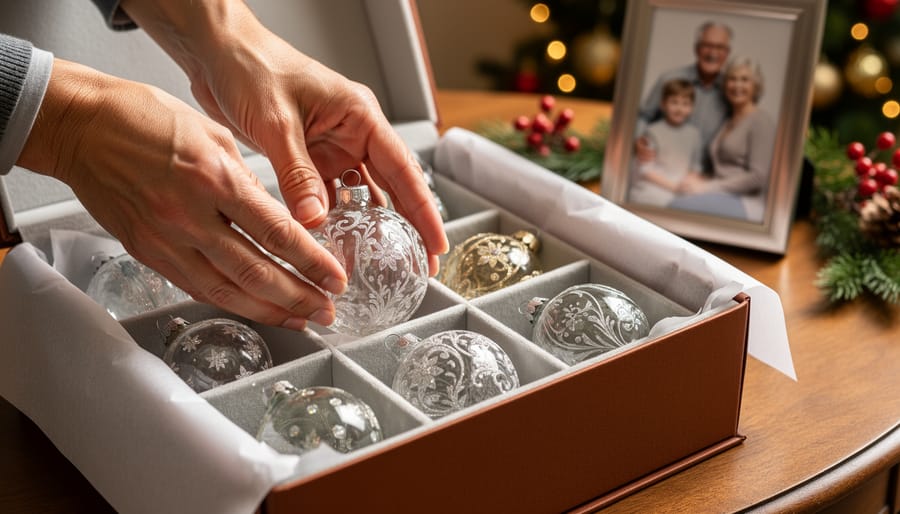
Treasuring these delicate glass heirlooms means protecting them for generations to come. When the season winds down, treat each ornament like the precious memory it holds. Begin by wrapping individual pieces in acid-free tissue paper, nestling them gently in layers that cushion without crushing. Vintage Italian ornaments, with their thin blown glass and hand-painted details, deserve compartmentalized storage boxes with dividers to prevent jostling.
Consider using the original boxes if you’re fortunate enough to have them, as they were designed specifically for these fragile beauties. Otherwise, invest in archival-quality ornament storage containers. Label each box with care, noting which ornaments rest inside—perhaps “Grandmother’s silver bells from Milano” or “red and gold teardrops from Venice.”
Store boxes in a climate-controlled environment, away from extreme temperatures and humidity that could damage delicate finishes. Attics and basements, while convenient, can be harsh on these treasures. A closet in your main living space works wonderfully. Following these guidelines for storing delicate decorations ensures your Italian ornaments will sparkle brilliantly each December, ready to weave their magic once more.
Displaying Your Italian Treasures
Transform your beloved Italian ornaments into breathtaking displays that celebrate their old-world charm. Create a heritage tree dedicated entirely to your Italian treasures, clustering hand-blown glass ornaments by color family to achieve that authentic Italian aesthetic where jewel tones shimmer in golden light. Nestle delicate glass pinecones and mushrooms among fresh evergreen branches, allowing the natural greenery to cradle each precious piece.
Beyond the tree, arrange vintage ornaments in glass apothecary jars or antique wooden bowls as stunning tablescapes that invite closer inspection of their intricate details. Display your most treasured pieces in shadow boxes hung on walls, transforming them into year-round art that tells your family’s story. Create a mantelpiece vignette by draping vintage Italian ornaments along garland, mixing sizes and shapes for visual interest. Layer ornaments atop lace doilies or velvet fabric in deep burgundy or forest green, echoing the rich colors found in Italian churches and piazzas. Remember, these aren’t just decorations but heirlooms deserving of places of honor where their beauty can be admired and their stories shared with each generation.
As the last ornament finds its place among the twinkling branches and the soft glow of your tree illuminates these precious Italian treasures, you’re not simply decorating for the season—you’re weaving together centuries of tradition, artistry, and heart. Each vintage Italian ornament carries within it the laughter of Milanese workshops, the careful hands of Venetian glassblowers, and the timeless spirit of Natale celebrations that have warmed Italian homes for generations.
These beautiful pieces do more than catch the light; they catch memories, both those passed down through family lines and new ones waiting to be created. Whether you’ve inherited a collection from your nonna or discovered your first piece at an antique market, these ornaments invite you to become part of a story that transcends borders and time. They remind us that the magic of Christmas lives not in perfection, but in the cherished objects that gather us together, year after year.
Starting your own tradition with vintage Italian ornaments doesn’t require a complete collection or perfect knowledge. It simply asks that you approach each piece with curiosity and care, appreciating the craftsmanship and the journey it took to reach your hands. Let these ornaments inspire conversations around your table, spark wonder in children’s eyes, and create that ineffable sense of homecoming that defines the most meaningful holiday celebrations. In honoring these treasures, you honor the enduring warmth of Italian Christmas magic and create new memories that will shimmer brightly for generations to come.