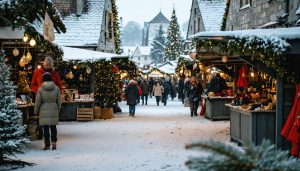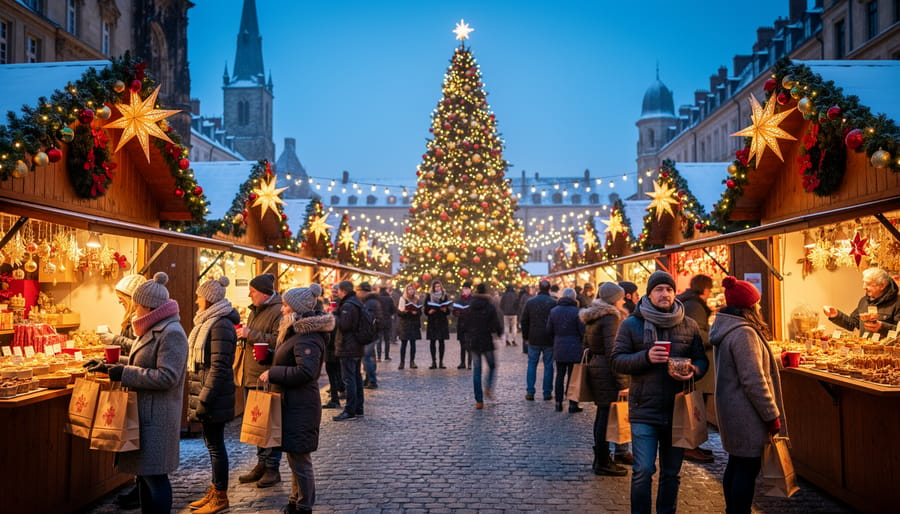
European Christmas markets are festive outdoor bazaars that spring to life across Europe each winter, where centuries-old tradition meets holiday magic in cobblestone squares filled with wooden chalets selling handcrafted gifts, seasonal treats, and warming mulled wine. These beloved gatherings transform town centers into enchanting wonderlands of twinkling lights, the scent of roasted chestnuts, and the sound of carolers, offering visitors an immersive experience of authentic European Christmas culture that has captivated hearts for generations.
What began in medieval Germany as simple winter markets has evolved into one of Europe’s most cherished seasonal traditions, drawing millions of visitors who seek the nostalgic warmth and joy these gatherings uniquely provide. Whether you’re sipping spiced Glühwein beneath a glittering Christmas tree in Vienna, browsing hand-carved nativity scenes in Prague, or watching children ride vintage carousels in Strasbourg, each market offers its own regional flavor while sharing the same spirit of community and celebration.
This guide explores everything you need to know about European Christmas markets: what makes them special, how they operate throughout the season, what treasures and experiences await you at the wooden stalls, and the rich cultural traditions that have kept these magical gatherings alive for centuries. Understanding their essence helps you appreciate why these markets remain the heartbeat of European Christmas celebrations.
What European Christmas Markets Are
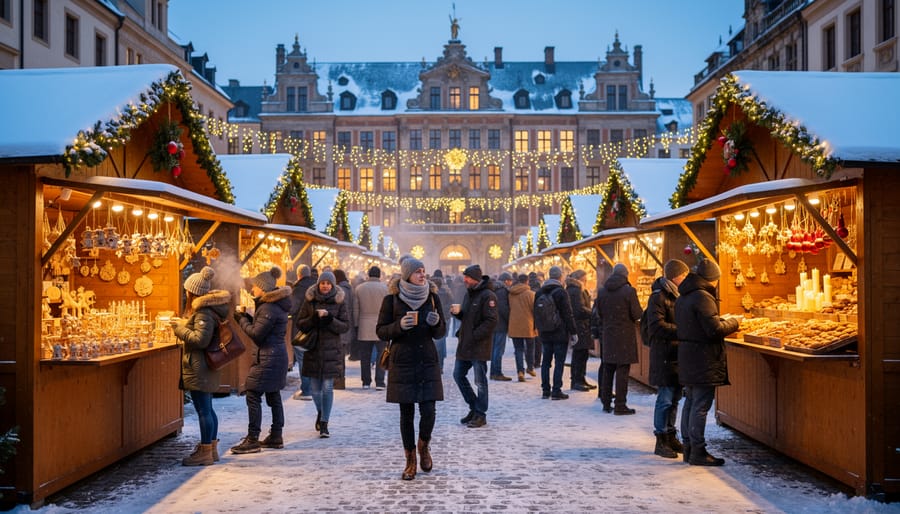
European Christmas markets are seasonal outdoor shopping events that transform town squares and public spaces into enchanting winter wonderlands each year. Running from late November through Christmas Eve, these markets feature rows of wooden chalets, often called huts or stalls, decorated with evergreen garlands, twinkling fairy lights, and festive ornaments. The stalls offer everything from handcrafted gifts and ornaments to steaming mugs of mulled wine and regional holiday treats.
What sets these markets apart from ordinary shopping is their unique blend of commerce and cultural celebration. They’re not just places to buy things, but destinations where the act of shopping becomes part of a larger holiday ritual. The wooden architecture, aromatic scents of roasted chestnuts and spiced wine, and sounds of carol singers create an atmosphere that appeals to all the senses. Many markets center around a towering Christmas tree, with stalls arranged in a circuit that invites leisurely strolling.
At their heart, Christmas markets serve as gathering places where communities come together during the darkest, coldest months of the year. Locals meet friends for after-work glühwein, families bring children to see Santa or ride miniature trains, and visitors from near and far experience regional Christmas traditions firsthand. The markets preserve centuries-old customs while welcoming everyone into the shared experience of celebrating the season. They’re living traditions that turn shopping into something warmer and more meaningful, a communal celebration of light, generosity, and togetherness during Advent.
How Christmas Markets Work
Most European Christmas markets open in the final week of November, running through December 23rd or Christmas Eve, though some cities extend festivities through New Year’s. Vendors apply months in advance through local tourism boards or market organizers, who carefully curate a mix of traditional craftspeople, food purveyors, and regional artisans. You won’t find mass-produced trinkets at authentic markets, organizers prioritize handmade goods and regional specialties that maintain the market’s cultural character.
When you arrive at a Christmas market, you’ll find it’s almost always free to enter. These festive gatherings occupy historic town squares, pedestrian zones, or specially designated areas, transformed by rows of wooden chalets strung with fairy lights. The layout follows a natural flow: craft stalls line the perimeter, food and drink vendors cluster near central gathering areas with standing tables, and entertainment stages or nativity scenes anchor focal points.
The mechanics work like this:
- Stalls begin setting up several days before opening, with vendors securing permits and spaces based on tradition or lottery systems
- Markets typically open between 10 AM and noon, but the real magic starts around 4 PM when lights twinkle against the winter dusk
- Most vendors accept cash, though larger markets now take cards; smaller bills make transactions smoother
- The famous mug system works on deposits (usually €3-5), keep your souvenir or return it for your money back
- Peak hours run from 5 to 8 PM on weekdays, all afternoon on weekends; arrive earlier for breathing room
- Visitors naturally circuit the market, stopping at stalls that catch their eye while nursing a warm glühwein
The markets close between 8 and 10 PM on weeknights, later on weekends. This daily rhythm creates a ritual: locals stop by after work to meet friends over mulled wine, families bring children before dinner to see the decorations, and visitors bundle up for evening strolls through the glowing stalls. You’ll quickly fall into the pattern, wander slowly, pause often, let the aromas of roasted almonds and grilled sausages guide your path. There’s no rush, no agenda beyond soaking in the warmth and wonder of the season made tangible.
What You’ll Find at the Markets
Traditional Crafts and Gifts
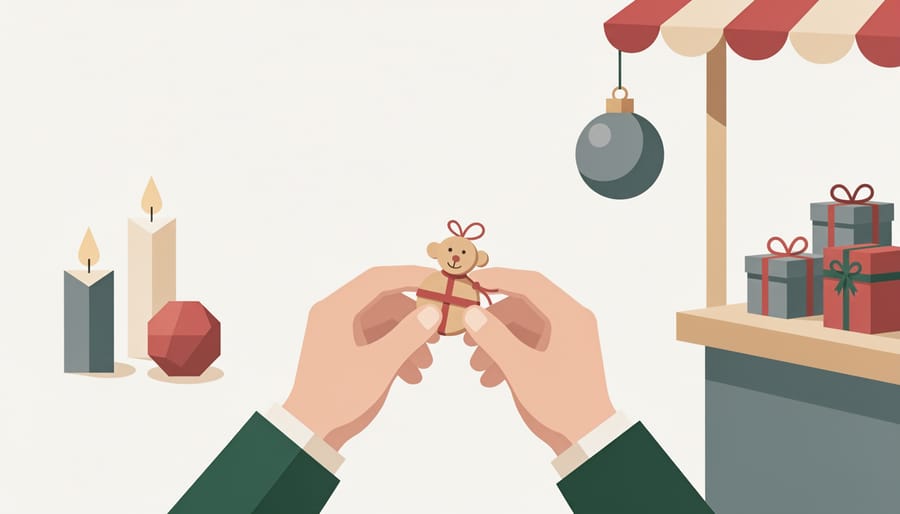
Wander through the craft stalls and you’ll discover treasures that carry centuries of tradition. Wooden ornaments hand-carved in Alpine villages showcase intricate details, snowflakes, angels, and stars that catch the light as they spin on your Christmas tree tradition. Each piece tells a story of skilled artisans who’ve passed down their techniques through generations.
The famous Erzgebirge nutcrackers stand guard in rows, their painted uniforms bright against dark wood, while delicate smoking figures puff incense through tiny chimneys. These aren’t mass-produced novelties, they’re functional folk art that families collect year after year. Hand-blown glass ornaments shimmer in jewel tones, each one unique with its own bubbles and curves that prove human hands shaped them.
Textiles offer another layer of tradition: embroidered table runners, felt stockings, and lace angels that grandmothers once made by candlelight. Local pottery bears regional patterns that identify their origin, whether blue-painted Delft designs or rustic German stoneware.
These crafts matter because they connect you to something real. When you give a hand-carved nativity figure or a painted wooden star, you’re sharing authentic European heritage, not just another holiday decoration.
Festive Foods and Drinks
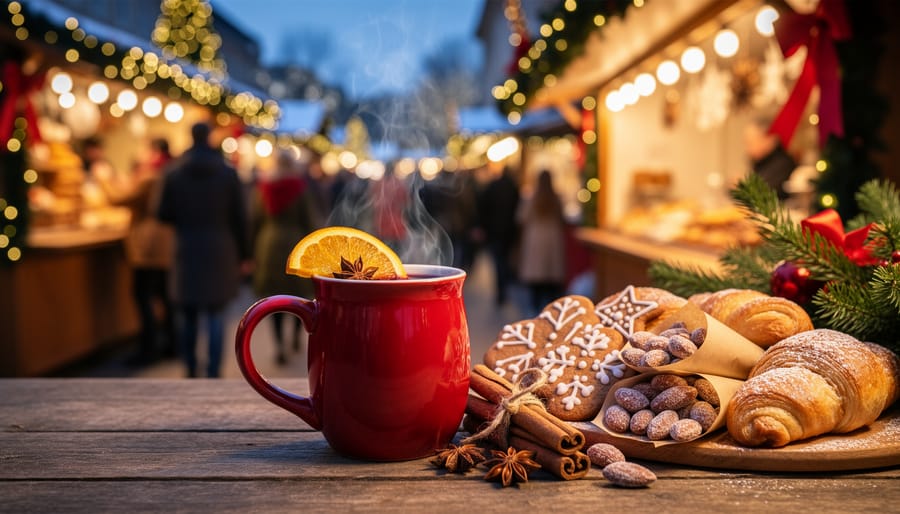
The aroma of mulled wine and roasted almonds draws you in before you see the stalls. Glühwein, the spiced red wine served steaming hot in ceramic mugs, is the market’s signature drink, each vendor adds their own blend of cinnamon, cloves, star anise, and citrus. Some markets feature feuerzangenbowle, a dramatic preparation where rum-soaked sugarloaf is set aflame over the wine. Children sip kinderpunsch, a non-alcoholic spiced fruit punch that’s equally warming.
Savory stands offer thick bratwurst nestled in crusty rolls, kartoffelpuffer (crispy potato pancakes) topped with applesauce or sour cream, and raclette scraped fresh over potatoes. The sweet stalls tempt with lebkuchen, spiced gingerbread cookies often decorated with icing, and slices of stollen, the dense fruit bread dusted with powdered sugar. Paper cones of gebrannte mandeln, candied roasted almonds, provide a crunchy, sweet snack as you wander.
Clutching a warm mug while browsing stalls in the cold evening air isn’t just refreshment. It’s part of the ritual, turning shopping into a cozy social experience.
Entertainment and Atmosphere
The magic of Christmas markets extends far beyond the stalls themselves. Wandering through the squares, you’ll encounter carol singers in traditional dress, their voices rising above the cheerful din. Brass ensembles play festive melodies that echo off historic buildings, while children shriek with delight on vintage carousels adorned with golden lights.
Life-sized nativity scenes draw quiet crowds, and the scent of cinnamon and pine mingles with wood smoke from braziers. Thousands of twinkling lights transform ordinary plazas into fairy-tale settings, especially magical as dusk falls and the glow intensifies. The murmur of conversation in multiple languages, laughter spilling from groups clutching steaming mugs, the crunch of fresh snow underfoot, these sensory layers weave together, creating an atmosphere that feels both intimate and grand, timeless yet vibrantly alive.
Different Styles of Christmas Markets Across Europe
While the wooden stalls and twinkling lights remain constant, each European region puts its own stamp on Christmas markets, creating distinct experiences that reflect local traditional celebrations and Advent traditions.
Germany’s Christkindlmarkt represents the classic style that many people picture when they think of Christmas markets. These markets feature perfectly symmetrical rows of wooden chalets, red-and-white striped awnings, and a strong focus on handcrafted ornaments and traditional foods. The most famous examples in Nuremberg, Dresden, and Munich showcase centuries-old customs, with strict vendor selection that prioritizes authentic craftsmanship over commercial goods.
Head into the Austrian Alps, and you’ll find markets nestled against snowy mountain backdrops in villages like Innsbruck and Salzburg. These alpine markets embrace their natural settings with rustic wooden architecture, warm sheepskin throws draped over benches, and an emphasis on warming drinks like jagertee (spiked tea). The atmosphere feels cozier and more intimate than their German counterparts, often incorporating local woodcarving traditions and mountain-inspired decorations.
French marchés de Noël bring an elegant sophistication, particularly in cities like Strasbourg and Colmar. Expect beautifully designed stalls with refined aesthetics, gourmet food offerings alongside traditional bredele cookies, and elaborate light displays that transform entire city centers. The French markets often extend their seasons longer and integrate more contemporary design elements while honoring tradition.
Italy’s mercatini offer an artisan-focused approach, especially in regions like South Tyrol and Trentino where German and Italian cultures blend. These markets showcase local crafts, from hand-painted ceramics to intricate nativity figures, and feature regional specialties like vin brulé and canederli. The Italian style tends toward smaller, more specialized markets rather than sprawling complexes.
Each region brings distinctive characteristics to the market experience:
- German markets emphasize traditional order, historic crafts, and strict authenticity standards with formal opening ceremonies
- Alpine markets feature rustic mountain charm, cozy warming huts, and locally-sourced wooden goods reflecting village traditions
- French markets showcase elegant design, gourmet food culture, and sophisticated light installations with refined aesthetics
- Italian markets focus on artisan quality, regional specialties, and intimate scale with strong connections to local craft traditions
Beyond these national styles, specialty markets add extra magic throughout Europe. Medieval markets in cities like Esslingen, Germany recreate historical atmospheres with costumed vendors and period-appropriate goods. Floating Christmas markets drift along rivers and canals in cities like Amsterdam, while mountain village markets in Switzerland and Austria offer breathtaking alpine settings accessible by cable car. Eastern European markets in Prague, Budapest, and Krakow blend Slavic traditions with the German market model, adding their own folk crafts, honey wines, and distinctive regional pastries to the mix.
Why Christmas Markets Matter in European Tradition
European Christmas markets carry a significance that reaches far deeper than their glowing stalls and warming cups of glühwein. These gatherings represent living threads connecting modern Europe to centuries of seasonal celebration, where the simple act of browsing handmade ornaments or sampling traditional treats becomes a way of honoring the past while creating new memories.
At their heart, markets function as community anchors during the darkest months. When the first stalls appear in late November, they signal more than retail opportunities. They mark the official start of Advent, transforming town squares into shared spaces where neighbors reconnect after months apart. Families return year after year to the same vendors, children grow up measuring time by annual visits, and grandparents pass down favorite stall recommendations like cherished heirlooms. This intergenerational continuity matters in an age when many traditions fade under modern pressures.
The markets also serve as vital preservers of regional craftsmanship and culinary heritage. Artisans who might otherwise struggle to sustain traditional woodcarving, glass-blowing, or textile techniques find eager audiences. A potter demonstrating centuries-old glazing methods or a baker preparing medieval gingerbread recipes doesn’t just sell goods, they keep disappearing skills visible and valued. Without these annual platforms, many authentic crafts would vanish entirely, replaced by mass-produced imitations.
Economically, markets support local makers in ways standard retail cannot. Small-scale producers earn meaningful income during concentrated weeks, funding their work for the entire year. This ecosystem keeps village workshops operating, apprenticeships viable, and regional specialties alive.
Perhaps most importantly, Christmas markets make tradition accessible rather than exclusive. Unlike formal ceremonies or religious services, these open-air gatherings welcome everyone regardless of background. A child can write a letter to Saint Nicholas at one stall, families can share Christmas Eve reading recommendations from booksellers, and strangers become temporary companions while warming their hands around the same fire barrel. They democratize the season’s magic, offering participation without barriers.
Planning Your Christmas Market Visit
Getting the timing right transforms your market experience. Weekday evenings offer a more relaxed atmosphere where you can browse stalls without jostling through crowds, while weekends bring festive energy but dense foot traffic. Most markets come alive around 4 PM when lights twinkle against the darkening sky, creating that magical golden hour worth planning for.
Pack smart and you’ll enjoy the evening more. Cash remains essential since many small vendors can’t process cards, and machines often have long queues. Tuck a lightweight reusable bag in your coat pocket for those irresistible purchases. Layering matters more than you’d think. The mulled wine warms you temporarily, but standing still while browsing crafts or watching performances can chill you quickly. Wear comfortable, waterproof shoes since cobblestone squares get slippery.
When do Christmas markets typically open?
Most markets run from late November through December 23rd or Christmas Eve, opening around 11 AM or noon and staying lit until 8-10 PM. A handful close on Christmas Day itself.
Do I need to bring cash?
Yes, cash is essential. While larger stalls may accept cards, many artisan vendors and food stands operate cash-only.
Are Christmas markets good for families with children?
Absolutely. Markets feature carousels, train rides, puppet shows, and sweet treats that captivate kids, though evenings can get crowded for strollers.
Can I bring my own mug for mulled wine?
Most vendors require you to use their ceramic mugs with a deposit system, but you can return the mug for your money back or keep it as a souvenir.
If you’re visiting a city with multiple markets, pick two or three rather than rushing through five. Each deserves an hour to soak in properly. With children, arrive earlier in the evening before crowds peak, and let them lead occasionally, they’ll spot the gingerbread decorating station or puppet theater you might have missed. Respect the rhythm of these spaces. Markets aren’t just shopping destinations but communal celebrations. Chat with vendors about their crafts, savor your bratwurst at a standing table rather than walking, and don’t photograph people without awareness. The magic lies in slowing down enough to feel part of the tradition unfolding around you.
European Christmas markets are living treasures that bridge centuries of tradition with the joy of today’s celebrations. They transform ordinary town squares into enchanted winter wonderlands where the past whispers through every handcrafted ornament and the present sparkles in children’s eyes.
These markets offer something deeper than shopping. They’re gathering places where strangers become friends over shared cups of mulled wine, where families create memories that will be retold for generations, and where the true spirit of Christmas, generosity, community, wonder, comes alive in the glow of a thousand twinkling lights.
Whether you find yourself wandering through Vienna’s historic stalls, discovering a charming village market in the Black Forest, or enjoying a local adaptation closer to home, you’re participating in a tradition that has warmed hearts for hundreds of years. The magic isn’t just in what you buy or taste. It’s in the laughter echoing off ancient buildings, the carol singers’ voices rising into crisp winter air, and the feeling that, for these precious weeks, the whole world slows down to celebrate together.
Embrace the experience. Let yourself be swept up in the wonder. These markets remind us that Christmas is best celebrated not alone, but surrounded by light, warmth, and community.